Recommended picks
- Great Northern Popcorn Company
Great Northern Popcorn Company 6058 Acrylic Snow Cone Shaved Ice Machine
$264.83500+ bought last monthView on Amazon
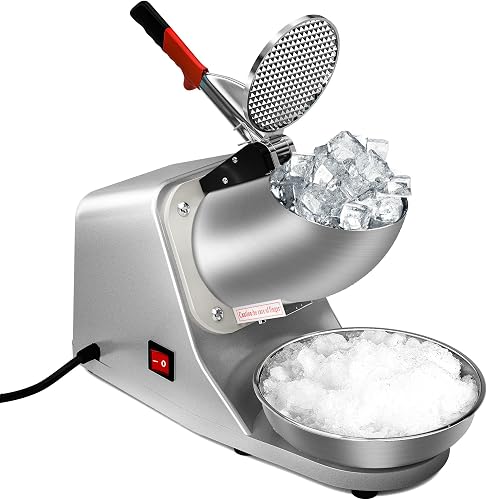
Home machines are designed for occasional batches, a few servings at a time for kids or a backyard party. They tend to be compact and lightweight, which makes storage easy, but they can overheat if you run them continuously for more than a few minutes. Commercial machines are built for sustained, high-volume output and typically weigh considerably more, such as the Great Northern 6058 at 33.4 lb, because they use heavier motors and thicker housings. If you plan to use a machine at a school fair, a food stand, or any event where demand runs for hours, the extra weight and cost of a commercial unit is worth it. For everything else, a home model is the practical choice.
Wattage directly affects how finely and consistently a machine shaves ice. Lower-wattage motors, around 110W to 200W, produce a coarser, snow-cone style texture that works fine with flavored syrups but lacks the ultra-fine, almost powdery quality you find at Hawaiian shave-ice shops. Machines in the 265W to 300W range, like the Zeny 300W model at $49.99, can produce noticeably finer results because the motor does not bog down mid-block. If texture is a priority and you want something closer to fluffy Japanese kakigori-style ice, prioritize at least 250W. Budget models under 150W are better thought of as snow-cone makers.
A stainless steel blade holds an edge longer than cheaper alloy blades and is easier to sanitize. The sharpness of the blade at purchase is less important than how easily you can replace or resharpen it, since a dull blade produces uneven, chunky ice no matter how powerful the motor. Check before you buy whether replacement blades are sold separately and what they cost, because some budget machines use proprietary fittings that make replacements hard to find. Rinse and dry the blade after every use to prevent rust and flavor carryover between sessions.
Compact home machines tend to run around 14 to 18 inches long and 6 to 8 inches wide, which fits easily on a kitchen counter or stores in a cabinet. Mid-range commercial units, like the Vevor 110V Electric Ice Shaver at 24 x 20 x 16 in and 25 lb, require dedicated counter space and are heavy enough that you will not want to move them often. Before buying, measure the space where you plan to keep the machine and account for clearance above the shaving chamber. Taller machines can be a problem in kitchens with low cabinets.
Most home shaved ice machines are designed to shave standard ice cubes, which you can make in any freezer tray, so setup is straightforward. Block-ice machines require you to freeze water in a dedicated mold first, adding a 24-hour prep step, but the resulting texture is generally finer because block ice is denser and more uniform than cube ice. If you value convenience, a cube-compatible machine is the better fit. If you want the smoothest possible texture and are willing to plan ahead, a block-ice model is worth the extra prep.
Budget machines under $50, like the Zeny 300B at $24.99, are best for light use and are a low-risk way to find out how often your household actually reaches for shaved ice before committing to a more expensive unit. Mid-range machines in the $50 to $150 range typically offer more power, a sturdier build, and quieter motors. Commercial-grade machines above $200 are justified only if you need sustained output or plan to serve paying customers. Avoid buying purely on brand name at the high end, check review counts alongside ratings, since a 4.7-star product with only 40 reviews gives you much less confidence than a 4.6-star product with 5,900.
Snow cone machines chop or crush ice cubes into coarse, chunky pieces that melt quickly and tend to let the syrup sink to the bottom. Shaved ice machines, especially those with higher-wattage motors and sharp steel blades, shave ice into fine, fluffy ribbons that absorb syrup more evenly and melt more slowly. The texture difference is the main reason Hawaiian shave ice has a softer, almost creamy mouthfeel compared to a standard snow cone.
Most home shaved ice machines are designed specifically for standard ice cubes, so yes. Block-ice machines require a dedicated mold and extra freezing time but produce finer results because block ice is more uniform in density. Check your machine's manual before using anything other than standard cubes, since some machines can jam or wear blades faster with unusually large or irregularly shaped ice.
After each use, remove the blade assembly and rinse it under cold water, then let it air dry completely before reassembling to prevent rust. Wipe down the ice chamber and any plastic parts with a damp cloth. Never submerge the motor housing in water. A thorough cleaning after every session prevents flavor carryover and keeps the blade from corroding, which is the fastest way to ruin ice texture.
Not for home use. A $25 machine with 5,900 reviews and a 4.6-star rating can be a more reliable purchase than a $280 machine with only a handful of reviews, because real-world buyer feedback is a better quality signal than price. Pay more when you need commercial-grade durability and sustained output, not simply for a higher number on the price tag. Match the machine to your actual usage frequency and serving volume.
For use in the United States, look for machines rated at 110V or 120V, which are standard household voltages. Some imported machines, including certain Zeny models listed as 220V, require a separate voltage converter to run safely on a U.S. outlet. Running a 220V machine on a 110V circuit without a converter will result in a weak motor and poor performance, while plugging it in without any converter at all can damage the machine.