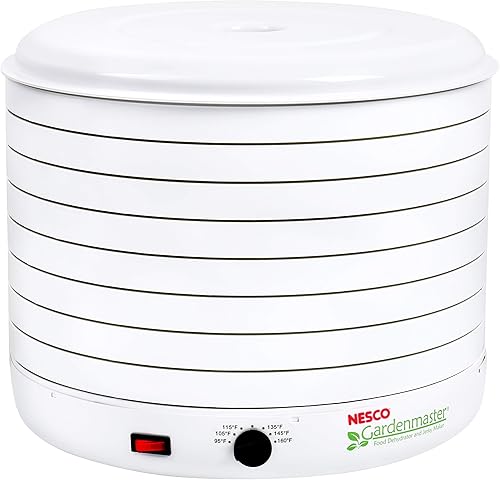
The Nesco FD-1018A is a solid mid-range stackable dehydrator with 8 trays and a 160F ceiling, making it capable of handling jerky, fruit, and herbs without a big footprint. At $176.99, it sits in a competitive range, but buyers who want a shelf-style unit or precise digital controls will find better fits elsewhere.
Home dehydrating enthusiasts who want more tray space than entry-level Nesco models without stepping up to a full commercial unit.
Skip if
You want digital controls, a shelf-style design with horizontal airflow, or need to process large batches in fewer runs.
Trays 8
Max temp 160°F
Material Plastic
Color White
Dimensions 17 X 15.5 X 14 In
Priced 53% above the category median ($115.49 across 38 tracked models)
Trays of 8 - higher than 62% of the 38 models we track
Max temp of 160°F - lower than 60% of the 38 models we track
Pros
8 trays provide a good batch size for home use
160F max temperature meets food-safety targets for jerky
17 x 15.5 x 14 inch footprint is manageable on a counter
4.4-star average across 2,900 reviews suggests consistent satisfaction
Cons
Stackable airflow may require tray rotation for even results
No digital controls or timer noted in specs
Plastic construction limits long-term durability compared to stainless options
Our scorecard
4.4/5overall
Owner rating4.4/5
4.4 average across 2,900 owner ratings
Popularity3.7/5
2,900 owner reviews, more than most models here
The overall score is owner satisfaction weighted by how many reviews back it, so a high rating from few reviews counts for less. The bars below show where this model stands against the other slow cookers, electric pressure and rice cookers, sous vide, food dehydrators, egg cookers, popcorn poppers, and ice cream and shaved ice machines we track in this category on price, popularity and size. Context, not marks against it, and our read of the data, not a lab test.
Overview
The Nesco FD-1018A brings 8 stackable trays and a 160F maximum temperature to a mid-size footprint measuring 17 x 15.5 x 14 inches. That combination covers the most common home dehydrating tasks: beef jerky needs at least 155 to 160F for food safety, and fruit and vegetable work happens comfortably in the 125 to 145F range.
With 8 trays you get meaningfully more drying surface than the 4-tray Nesco entry models, which helps when processing a full harvest or a larger batch of jerky. The plastic construction is standard for this price range and keeps weight manageable, though it means you should avoid abrasive cleaning tools to protect the trays long-term.
At $176.99 this model competes against shelf-style units that offer more even airflow from a rear-mounted fan. Stackable designs circulate air vertically, which can require rotating trays partway through a long run. That is a real workflow consideration for buyers who prefer a set-and-forget approach.
Performance notes
The unit tops out at 160F and measures 17 x 15.5 x 14 inches. No wattage figure is listed, so direct energy-use comparisons are not possible. The 8-tray configuration gives a reasonable drying surface for mid-volume home batches.
What buyers say
With 2,900 reviews and a 4.4-star rating, the FD-1018A has a large enough feedback pool to be meaningful. Buyers appear generally satisfied, placing it in line with other well-regarded Nesco models. The volume of reviews suggests it has been purchased steadily over time rather than benefiting from a short spike.
Similar slow cookers, electric pressure and rice cookers, sous vide, food dehydrators, egg cookers, popcorn poppers, and ice cream and shaved ice machines to consider
Yes. The 160F maximum temperature meets the USDA guideline of reaching 160F for beef jerky. You would set the unit to its highest temperature for the initial phase of a jerky run, then reduce heat if desired for a longer drying period. Always use a separate food thermometer to verify the meat reaches 160F.
How does the 8-tray FD-1018A compare to 4-tray Nesco models?
The main difference is batch capacity. Eight trays give you roughly twice the drying surface of a 4-tray unit, which matters when processing a larger harvest or a full batch of sliced meat. The tradeoff is a larger physical footprint and a higher price, so the right choice depends on how often you dehydrate and in what volume.
Does this dehydrator need tray rotation during a run?
Stackable dehydrators move air vertically, and the trays closer to the heating element often dry faster than those farther away. Rotating trays halfway through longer runs is a common practice with stackable designs to get more even results across the full batch. Shelf-style units with rear-mounted fans tend to be more even without rotation.
We use necessary cookies to keep the site working. With your permission, we also use functional, analytics, and marketing cookies. Read our Cookie Policy.