Rice to Water Ratio for a Rice Cooker: A Practical Guide
The correct water ratio depends on the rice variety and your specific cooker, but a handful of reliable starting points covers most home cooks.
One of the most common complaints about rice cookers is mushy or undercooked rice, and the culprit is almost always the wrong amount of water. The ratio that works perfectly on the stovetop does not always translate directly to a countertop cooker because the sealed environment changes how steam behaves. Getting this right comes down to knowing your rice type, checking whether your cooker uses measuring cups that match standard US cups, and making small adjustments the first few times you cook. Once you dial it in for your machine and your preferred variety, you can set it and walk away every single time.

Why Rice Cooker Ratios Differ from Stovetop
A stovetop pot loses steam through gaps in the lid, so extra water compensates for evaporation. A rice cooker traps nearly all of that steam and recycles it back into the pot during cooking. That means you need less water overall than you would use on the stove. If you carry your usual 2-to-1 stovetop habit into a rice cooker, white rice can come out soft and clumped. Most rice cookers also come with their own plastic measuring cup that holds about 180 ml, which is roughly three-quarters of a standard US cup. If you use that cup to measure both rice and water at a 1-to-1 fill line, the results will differ from measuring with a proper US cup and applying a ratio. Always check which cup your machine expects before you start.
Ratios for Common Rice Varieties
For long-grain white rice, a ratio of 1 cup rice to 1.5 cups water is the standard starting point in most rice cookers. Jasmine rice, which is naturally more fragrant and slightly stickier, does well at 1 cup to 1.25 cups water. Basmati rice tends to be drier and fluffy when cooked at 1 cup to 1.5 cups water, though soaking it for 20 to 30 minutes first and reducing water slightly by 2 tablespoons can improve the texture. Short-grain white rice and sushi rice typically call for 1 cup to 1.1 to 1.2 cups water since you want a tackier finish. Brown rice needs more water and more time, so use 1 cup to 1.75 cups water and expect the cycle to run 45 to 55 minutes rather than the 20 to 30 minutes typical for white rice. Wild rice blends follow a similar approach to brown rice at roughly 1 cup to 1.75 cups water.
How Machine Size and Wattage Affect Results
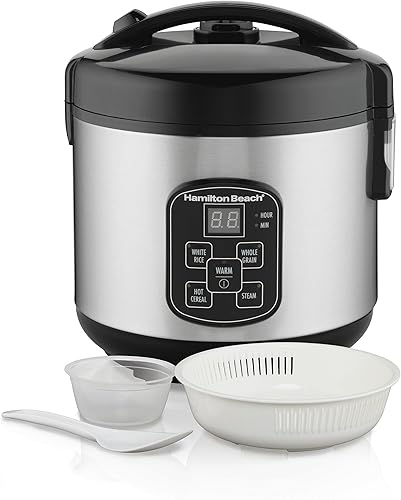
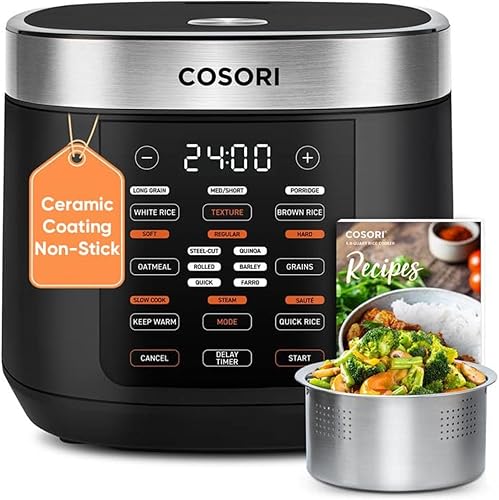
Smaller, lower-wattage cookers take longer to reach cooking temperature, which can lead to slightly more evaporation before the lid seals the steam cycle. A compact 400W cooker like the Hamilton Beach 37518MN, rated 4.4 stars across more than 20,000 reviews and priced around $35, may benefit from an extra tablespoon or two of water compared to a more powerful machine. A 1000W cooker like the Cosori CRC-R501-KUS, which holds a 4.8-star rating from over 5,400 reviewers at about $100, heats faster and may need water precisely at the lower end of a ratio range. Larger-capacity machines designed for commercial or family use at high wattages may also build steam more efficiently, so always treat published ratios as a starting point rather than an absolute. Keep a notebook or phone note the first few times you cook a new variety so you remember what adjustment worked.
Tips for Getting Consistent Results
Rinse white rice under cold water until the water runs mostly clear before measuring. Rinsing removes surface starch that would otherwise make the cooked rice gummy. After rinsing, let the rice drain for a minute so excess water does not throw off your ratio. Add the water to the pot first, then add the rice, or do it the other way if your machine instructions say otherwise. Once the cooker finishes its cycle, resist the urge to open the lid immediately. Let it sit on the warm setting for 10 minutes so the rice can finish steaming evenly. Then use a rice paddle or fork to fluff it from the sides toward the center, which separates the grains without pressing them flat.
Adjusting for Altitude
At elevations above 3,000 feet, water boils at a lower temperature, which means rice cookers take longer and may need slightly more water to fully cook the grain. If you live at higher elevation and your rice comes out undercooked or still crunchy in the center, try adding an extra 2 tablespoons of water per cup of rice. Some cooks at high altitude also find that soaking the rice for 30 minutes before cooking improves hydration before the heating cycle even begins. It takes a few tries to find the right combination for your location and machine, but the adjustment is small once you know it.
What to Do When Rice Comes Out Wrong
If your rice is too wet or mushy, reduce the water by 2 tablespoons in your next batch and skip the extra rest time after cooking. If it is dry or crunchy in spots, add 2 tablespoons more water next time and make sure the lid sealed completely before the cycle started. A cracked or warped lid gasket on older machines can cause uneven cooking by letting steam escape. Uneven results where the bottom is perfect but the center is underdone usually means the rice was not level in the pot before cooking. Spread it evenly and make sure the water is covering the rice uniformly before starting the machine.
Quick Reference Chart
Here is a fast reference for the most common varieties: long-grain white rice, 1 cup to 1.5 cups water; jasmine, 1 cup to 1.25 cups water; basmati, 1 cup to 1.5 cups water (soak first for best results); short-grain or sushi rice, 1 cup to 1.1 to 1.2 cups water; brown rice, 1 cup to 1.75 cups water; wild rice or blends, 1 cup to 1.75 cups water. These are starting points for machines using standard US measuring cups. If your cooker came with its own cup, check the manual for the corresponding water line markings on the inner pot, which are calibrated to that smaller cup size.
Frequently asked questions
Do I use the same ratio for every type of rice in a rice cooker?
No, different varieties absorb water at different rates. White rice generally needs less water than brown rice, and sticky or sushi-style short-grain rice needs less than long-grain varieties. Use the specific ratio for the type you are cooking and adjust by a tablespoon or two based on how your machine performs.
Can I use the measuring cup that came with my rice cooker?
Yes, but be aware that most rice cooker cups hold about 180 ml rather than the 240 ml in a standard US cup. Your machine inner pot has water fill lines that are calibrated for that smaller cup. If you switch to a standard US measuring cup, use the ratios in this guide instead of the fill lines, since the lines will not match.
Why does my rice stick to the bottom of the pot?
Sticking usually happens when the ratio is slightly off, when the inner pot has worn non-stick coating, or when the rice is not rinsed before cooking. Try rinsing the rice, reducing the cook time if your machine has a manual setting, and adding a small amount of oil or butter to the water. A separate guide on rice sticking covers this in more detail.
Should I soak rice before putting it in the rice cooker?
Soaking is optional for white rice but can improve texture. For basmati and brown rice, a 20 to 30 minute soak helps the grain hydrate more evenly before heating starts. If you soak the rice, drain it fully before measuring it into the pot so the soaking water does not throw off your ratio.
How much rice can I cook at once in a home rice cooker?
Most home rice cookers in the 2 to 2.5 quart range handle 3 to 5 cups of dry rice per batch, though smaller 0.8 to 1.5 quart models max out around 1 to 2 cups. Never fill the pot past the maximum line marked on the inside, since rice expands and too much rice can push against the lid and disrupt the cycle.