Slow Cooker vs Instant Pot for Beginners: Which One Should You Buy?
Both appliances promise easy, hands-off meals, but they work very differently and suit different cooking habits.
If you are trying to decide between a slow cooker and an Instant Pot, you are not alone. Both show up on every beginner appliance list, and both can produce tender, flavorful meals with minimal effort. The differences come down to how much time you have, how comfortable you are with a learning curve, and what kinds of food you cook most often. This guide covers the practical tradeoffs so you can spend your money on the right machine the first time.


What Each Appliance Actually Does
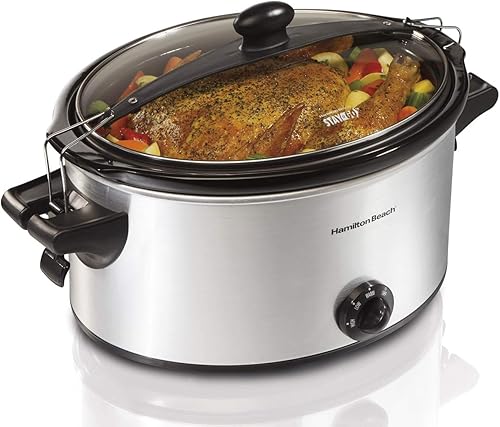
A slow cooker works by applying low, steady heat over a long period, typically 4 to 10 hours depending on the setting. You add your ingredients, set the dial to low or high, put the lid on, and walk away. An Instant Pot is a multi-cooker that includes a pressure cooker function, a slow cooker function, a saute function, and several other modes in one unit. The pressure cooker function is the most popular feature, and it cuts cooking times dramatically, turning a pot roast that takes 8 hours in a slow cooker into a 60 to 90 minute job. Both appliances are sold as set-it-and-forget-it tools, but the Instant Pot requires a bit more active attention, especially while you are learning how the pressure and valve system works.
Price and Upfront Cost
Slow cookers are generally the cheaper option to start. Entry-level models like the Elite Gourmet MST-900D, an 8.5 qt stoneware unit rated 4.4 stars across over 6,400 reviews, sell around $57.99. The Hamilton Beach 33262, a 6 qt model rated 4.6 stars, runs about $67.70. Basic slow cookers from multiple brands are available for $20 to $70 depending on size and features. Instant Pot multi-cookers typically start around $70 and go up from there. The Instant Pot 140-4040-01, a 7.5 qt unit rated 4.4 stars across 627 reviews, is priced at $69.99, which puts the two categories at roughly the same entry price on the low end. Where the gap widens is in the feature set you get for that money: a slow cooker at $60 does one thing, while an Instant Pot at the same price does several.
Learning Curve and Ease of Use
For total beginners, a slow cooker is the simpler machine to start with. There are usually only two or three settings: low, high, and sometimes warm. You do not need to seal a lid, monitor pressure, or release steam. The Instant Pot has a steeper learning curve, not because it is complicated, but because you have to understand concepts like pressure release methods (quick release vs natural release), minimum liquid requirements, and which foods respond well to pressure versus which turn mushy. Most people pick it up after a few cooks, but the first couple of meals may involve some troubleshooting. If you want something you can hand to a teenager or a partner who rarely cooks, the slow cooker is the lower-risk choice.
Cook Time and Your Schedule
This is where the two appliances split most clearly. A slow cooker is built for people who can plan ahead. You load it in the morning, leave for work, and come home to a finished meal. An Instant Pot is better if you need dinner on the table in under an hour on a weeknight. Chicken thighs that take 6 hours on low in a slow cooker can be done in about 25 minutes under pressure in an Instant Pot. If your household has a consistent morning routine, a slow cooker fits naturally into that rhythm. If you often decide what to make at 6 p.m., the Instant Pot gives you more flexibility. Some households end up with both for exactly this reason.
Which Foods Each Appliance Handles Better
Slow cookers excel at braised meats, soups, stews, beans cooked from dry, and dishes that benefit from long, moist heat. Tough cuts like chuck roast, pork shoulder, and chicken thighs become very tender over 8 hours on low. Slow cookers are less ideal for delicate vegetables, which can turn to mush if left too long. Instant Pots handle most of the same proteins and legumes faster, and they do a particularly good job with rice and grains using the built-in rice mode. They are also useful for recipes that call for sauteing first and then simmering, since you can do both in the same pot. Dairy, however, generally does better added at the end in both appliances to avoid curdling.
Cleanup and Counter Space
Slow cookers have a removable ceramic or stoneware insert that is typically dishwasher-safe and easy to hand wash. The exterior stays relatively clean. Instant Pots have more parts: the inner pot, the lid with its sealing ring, the steam release valve, and the condensation collector. Most of these are dishwasher-safe, but there are more pieces to keep track of. Both appliances take up a similar amount of counter space, roughly the footprint of a large mixing bowl. If cabinet space is tight, the Instant Pot offers more value per square inch because of its multiple functions. If you rarely cook anything other than soups and braises, a dedicated slow cooker keeps things simpler.
Which One Should a Beginner Buy?
Buy a slow cooker if: you want the simplest possible appliance, you have a morning routine that lets you set up dinner before you leave, or you are on a tight budget and want to avoid a learning curve. Buy an Instant Pot if: you want one appliance that replaces several, you do not have 8 hours to leave food cooking, or you already cook enough to feel comfortable learning a new system. If budget is not a concern and you cook frequently, getting both over time is a reasonable approach since they complement each other well. For most first-time buyers choosing just one, a 6 to 8 quart slow cooker around $40 to $70 is the lower-risk starting point.
Frequently asked questions
Can an Instant Pot replace a slow cooker completely?
Technically yes, since most Instant Pot models include a slow cooker setting. However, many users find that the slow cooker function on an Instant Pot does not replicate the same results as a dedicated slow cooker, partly because the lid seals differently and the heat distribution varies. If slow cooking is your primary use, a dedicated slow cooker usually gives more consistent results for that specific task.
Is a slow cooker cheaper to run than an Instant Pot?
Slow cookers typically draw between 100 and 400 watts and run for 6 to 10 hours, so they use a moderate amount of electricity per meal. Instant Pots draw more wattage during pressure buildup but finish cooking in a fraction of the time. Over the course of a meal, energy consumption tends to be similar or slightly lower for the Instant Pot due to the shorter cook time.
What size slow cooker should a beginner buy?
For a household of 2 to 4 people, a 6 quart model is the most practical starting point and is the most common size on the market. If you regularly cook for one or two people and prefer smaller portions, a 4 quart model works well. Sizes of 8 qt or more are best for large families or batch cooking where you want to freeze extra portions.
Are Instant Pots safe to use?
Modern Instant Pots are designed with multiple safety features including automatic pressure limiting, a locking lid that cannot be opened while pressurized, and overheat protection. Following the instructions in the manual, particularly the minimum liquid requirement and the correct sealing ring placement, covers the most common sources of user error. Thousands of cooks use them daily without issues.
Can I leave a slow cooker on while I am at work?
Yes, and this is one of the main reasons people buy them. A slow cooker on the low setting is designed to run for 8 to 10 hours safely, which lines up with a standard workday. Make sure your model is in good condition with no cracks in the insert, and place it on a clear, heat-safe surface away from anything flammable. Programmable models that switch to warm mode after the cook time ends add an extra layer of flexibility if your schedule is unpredictable.