Sous Vide Steak Times and Temperatures
The right temperature is everything in sous vide steak cookery, and a few degrees in either direction separates a perfect medium-rare from one that disappoints.
Sous vide removes the guesswork from cooking steak by holding the water bath at exactly the temperature you want the finished meat to reach. Unlike a skillet or grill, the method cannot overshoot, so a steak set to 130 degrees F will never climb to 140 degrees F no matter how long it stays in the bag. The only two variables you control are temperature and time, and both matter. This guide covers the numbers you need for every common doneness level, plus how thickness and steak type change the calculation.


How Sous Vide Temperature Controls Doneness
In traditional cooking, you pull the steak before it hits your target temperature because carryover cooking finishes the job. With sous vide, there is no carryover, so the bath temperature is your final internal temperature. Set the bath to 129 degrees F and the center of the steak will reach 129 degrees F and stop there. This precision is why the method produces edge-to-edge even color rather than the bullseye gradient you see from a hot pan. The only heat above your target comes later, during a brief sear to develop a crust, which adds only a degree or two to the very surface.
Temperature Chart by Doneness Level
Rare runs from 120 to 128 degrees F. The steak is deep red, very tender, and has a soft, almost raw texture in the center. Medium-rare is 129 to 134 degrees F, the most popular target for cuts like ribeye and New York strip, producing a warm red center and tender bite. Medium falls between 135 and 144 degrees F, with a pink center and firmer texture. Medium-well is 145 to 155 degrees F, mostly gray with just a hint of pink. Well-done starts above 155 degrees F and delivers a fully gray, firm steak, which most sous vide enthusiasts avoid because the long cook at high temperature can produce an unpleasant texture. For most home cooks, 130 to 131 degrees F is the sweet spot.
Cook Times by Thickness
Thickness drives minimum cook time far more than weight does. A steak that is 1 inch thick needs at least 1 hour at temperature to reach the core. At 1.5 inches, allow 2 hours. A 2-inch-thick porterhouse needs at least 3 hours. Going longer than the minimum is generally fine because sous vide pasteurizes rather than overcooks, but very long times, say beyond 4 hours for a standard steak, can begin to soften the muscle fibers to a point where the texture feels mushy. For most cuts between 1 and 1.5 inches, a 1.5 to 2-hour window at your chosen temperature is a reliable target.
How Cut Type Affects the Approach
Tender cuts like ribeye, tenderloin, and strip steak do best at shorter times, 1 to 2 hours, because they are already naturally tender and do not benefit from the collagen-breaking effect of extended cooking. Tougher cuts like chuck steak or flank steak can go much longer. A chuck steak cooked at 131 degrees F for 24 to 36 hours will break down connective tissue and arrive tender without turning to pot-roast texture. Flank and skirt steak respond well to 6 to 10 hours at 130 to 135 degrees F. Knowing your cut before you set the timer prevents the disappointment of a chewy result or an overly soft one.
The Sear Step and Why It Matters
A sous vide steak exits the bag looking gray and wet, which is normal. The surface needs a quick, very high-heat sear to produce browning, flavor, and a proper crust. Pat the steak completely dry before it touches the pan, because moisture is the enemy of browning. A cast-iron skillet or carbon steel pan over the highest heat your stove allows is the standard approach. Thirty seconds to one minute per side is usually enough, adding butter and aromatics in the final thirty seconds if you like. Keep the sear short to avoid raising the interior temperature significantly, which would undo the precise temperature control you achieved in the bath.
Circulator Wattage and Temperature Stability
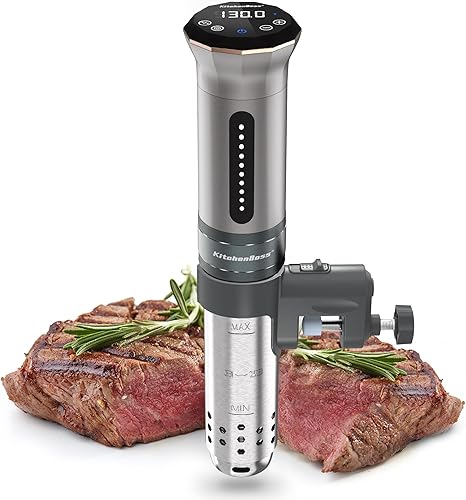
A circulator that holds temperature within a fraction of a degree matters more than wattage for steak results, though wattage determines how quickly the bath recovers when you add cold food. The Monoprice 121594, rated at 800 W and priced around $65, handles typical home containers without trouble and carries over 650 reviews at a 4.2-star average. The KitchenBoss G300, at 1100 W, handles a bath up to 16.9 quarts and has earned 4.5 stars across more than 2,200 reviews at around $106. Either circulator can hold the narrow temperature windows required for steak cookery without meaningful drift.
Common Mistakes to Avoid
Starting with frozen steak adds significant time to reach temperature at the core, so add at least 30 extra minutes or, better, thaw the steak first. Overcrowding bags so that steaks touch each other prevents even circulation and can leave cold spots. Failing to remove as much air as possible from the bag, whether you use a vacuum sealer or the water-displacement method, allows the bag to float and reduces heat transfer. Finally, skipping the pat-dry step before searing is the most common reason home cooks end up with a steamed rather than seared crust.
Frequently asked questions
Can I sous vide a steak for too long?
Yes, though the window is wider than most people expect. Tender cuts like ribeye or tenderloin start to lose their pleasant bite after about 4 hours at medium-rare temperatures, taking on a softer, almost mushy texture. Tougher cuts tolerate much longer times, sometimes 24 to 48 hours, because the extended cook is what makes them tender in the first place.
Is it safe to eat steak at 130 degrees F using sous vide?
Pasteurization is a function of both temperature and time, not temperature alone. At 130 degrees F, beef is pasteurized after about 2 hours, which is within the typical cook window for sous vide steak. Cooking to a higher temperature like 140 degrees F pasteurizes faster, in under 15 minutes. If food safety is a concern, staying in the bath for the full recommended time at your chosen temperature addresses it.
Do I need an expensive sous vide machine to get good results?
Not necessarily. Circulators in the $65 to $110 range, like the Monoprice 121594 or KitchenBoss G300, hold temperature accurately enough for steak cookery. The key spec to look for is temperature accuracy, ideally within 0.1 to 0.2 degrees F, rather than high wattage or premium materials.
Can I sous vide steak from frozen?
You can, but you need to add at least 30 minutes to your cook time to account for the extra time required to bring the center up to bath temperature. The quality result is comparable to cooking from fresh, making frozen-to-sous-vide a convenient option when you forgot to thaw ahead of time.
What temperature should I set for a well-done steak sous vide?
Set the bath to 156 degrees F or higher for well-done results. Keep in mind that cooking above 155 degrees F for extended periods can produce a dry, tough texture, which is why most sous vide guides recommend stopping at medium, around 140 degrees F, even for people who prefer less pink. If well-done is a firm preference, limit the cook time to the minimum needed to reach temperature.