What Else Can You Cook in a Rice Cooker?
Your rice cooker is one of the most versatile appliances on the counter, and most people use only a fraction of what it can do.
Most households bought a rice cooker to make rice, and it does that job well. But the sealed, moist-heat environment inside the pot is the same one that works for dozens of other foods. Once you understand what the appliance actually does, a whole range of meals opens up. This guide covers the most practical uses, with real tips on timing and technique.

How a Rice Cooker Actually Works
A rice cooker heats the inner pot until water turns to steam, then a thermostat senses when the temperature rises above 212 degrees F, which signals that the free water is gone and the food is done. That cycle is the same whether you load the pot with white rice, quinoa, or lentils. The keep-warm mode holds food at roughly 140 to 150 degrees F, which is hot enough to hold cooked food safely for an hour or two. Understanding this helps you predict which foods will work: anything that cooks by absorbing water or by steaming will do fine. Foods that need dry heat, browning, or precise high-temperature control are better left to other appliances.
Whole Grains and Legumes
Quinoa, farro, barley, millet, and lentils all cook well in a rice cooker using the same absorb-and-switch logic as white rice. Quinoa takes about the same time as white rice with a 1.75 to 1 water ratio. Brown lentils need more water, around 2.5 to 1, and may need 10 to 15 extra minutes on a basic cooker without a slow-cook mode. Steel-cut oats work too: use a 1 to 3 ratio of oats to water, let the cooker finish its cycle, and stir before eating. These are filling, hands-off options for weekday meal prep. A 2 qt cooker handles one to two servings comfortably, while a 5 qt model can batch enough grains for the whole week.
Soups and Stews
A rice cooker with a keep-warm or slow-cook setting can simmer a simple soup or stew without any monitoring. Add broth, diced vegetables, beans, and seasoning, then run the cook cycle two or three times in a row until everything is tender. Chicken soup, lentil soup, and bean stews are the most forgiving options. The pot size matters here: soups expand, so fill the pot no more than two-thirds to avoid boilover. A model like the West Bend RCWB20CSS13, rated 4.3 stars across 356 reviews with a 5 qt stainless steel pot at $51.59, gives you enough room to make a proper batch without the worry of overflow.
Steamed Vegetables and Fish
Most rice cookers come with a steamer tray or basket, and that accessory turns the machine into a basic steamer. Add an inch of water to the pot, place vegetables or a piece of fish on the tray, put the lid on, and run the cook cycle. Broccoli and carrots take 8 to 12 minutes, salmon fillets around 12 to 15 minutes depending on thickness. This is a low-effort way to cook a side dish at the same time your grains are finishing in a separate pot on the stove. Steaming preserves more water-soluble nutrients than boiling, so it is a practical cooking method beyond just convenience.
Breakfast Foods
Rice porridge, also called congee, is one of the oldest uses for a rice cooker. Use a 1 to 6 ratio of rice to water, start the cooker, and let it run through one or two cycles until the grains break down into a thick, creamy porridge. Rolled oats work on a simpler ratio, roughly 1 cup oats to 2 cups water. Some cooks also make a basic egg dish by cracking eggs into a small ramekin set inside the pot with water on the bottom, which gently steams the eggs. Breakfast prep the night before is one practical way to use the keep-warm mode, though food should not sit for more than two hours before eating for food safety reasons.
Pasta and Mac and Cheese
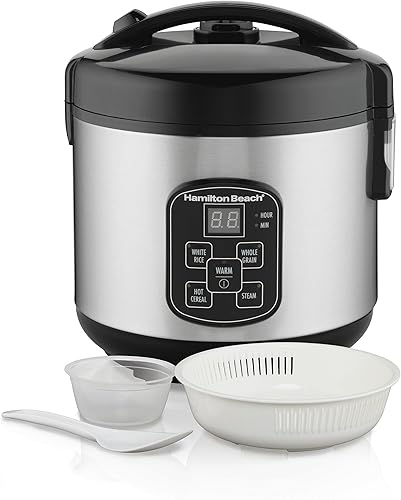
Shorter pasta shapes like elbow macaroni, small shells, and orzo cook in a rice cooker without boiling a separate pot of water. Add pasta, cover with an inch of water above the noodles, and run the cook cycle. Check and stir at the end because the cooker shuts off when the surface water is absorbed, not when the pasta is perfectly al dente. Drain any extra water and add your sauce or cheese directly in the pot. The Imusa GAU-00028, with a 4.6 star rating from 8,800 reviewers and a 2.5 qt stainless steel pot at $51.07, is a compact and well-reviewed choice for a household cooking single servings of pasta or grains. For families, the Hamilton Beach 37518MN at $35.77 with 20,600 reviews and a 4.4 star rating covers a 2 qt capacity that handles up to 4 cups of cooked grain per cycle.
Simple Desserts
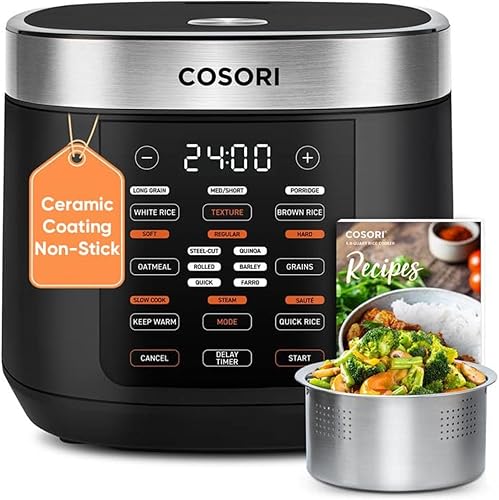
Rice pudding is the most obvious dessert, made by cooking rice with milk instead of water and adding sugar and vanilla after the cycle ends. The Cosori CRC-R501-KUS, rated 4.8 stars from 5,400 reviewers and priced at $99.99 with a 2.5 qt stainless steel pot and 1000 watts, has enough consistent heat to handle milk-based recipes without scorching. A basic steamed cake or sticky coconut rice with mango are other options that work in the pot. The key with desserts is using the keep-warm setting right away and stirring once so the bottom does not burn. These are not everyday recipes, but they show how far the appliance can stretch if you want to explore.
Frequently asked questions
Can I cook meat in a rice cooker?
Small pieces of boneless chicken thighs or ground meat can cook in a rice cooker alongside grains or broth, but it is not the fastest or most reliable method. The cooker will bring the internal temperature of the meat to a safe level as long as the pieces are small and the pot is not overcrowded. Larger cuts or bone-in pieces do not cook evenly enough to recommend. A slow cooker or pressure cooker is a better tool for any recipe where meat is the main event.
Will cooking non-rice foods damage my rice cooker?
Cooking grains, legumes, oats, and soups will not damage the pot or the heating element. The main risk with non-rice foods is boilover from starchy liquids foaming up and clogging the steam vent. Use less than two-thirds of the pot's capacity for soups and starchy foods, and wipe the vent after each use. Foods with a lot of fat, like cooking oil directly in the pot, can degrade a non-stick coating over time.
How do I know how much water to use for different foods?
The water ratio depends on how much the food absorbs and how long it takes to cook. White rice uses roughly a 1 to 1.5 ratio of rice to water. Quinoa is 1 to 1.75, brown lentils are 1 to 2.5, and steel-cut oats are 1 to 3. Pasta should be covered by about an inch of water above the noodles. When in doubt, start with slightly more water and check the food near the end of the cycle, since you can always run another cycle if the food needs more time.
Can I use the rice cooker to reheat leftovers?
Yes. Adding a tablespoon or two of water to leftover rice or grains and running a short cycle brings them back to a good texture without drying them out. The keep-warm mode also holds food at a safe temperature for up to two hours after cooking, which is useful for timing meals. For leftovers that are not grain-based, a stovetop or microwave will usually be faster and more even.
What size rice cooker works best for cooking a variety of foods?
A 2 to 2.5 qt cooker handles one to two servings of grains, pasta, or soup and fits most countertops easily. A 5 qt model is better for families or anyone doing weekly batch cooking of grains and stews. Very small cookers under 1 qt are primarily useful for single-serve rice portions and are too cramped for most other uses. If you plan to use the steamer tray regularly, look for a model where the tray sits above a meaningful amount of water, usually half a cup or more.