Why Does Rice Stick to My Rice Cooker?
Sticky, scorched rice on the inner pot is one of the most common rice cooker complaints. Here is what is causing it and how to stop it.
You lift the lid expecting fluffy rice and instead find a stubborn crust welded to the bottom of the pot. It is frustrating, and it wastes food. The good news is that rice sticking to a rice cooker almost always comes down to a handful of fixable causes: too little water, a worn or dirty inner pot, the wrong rice prep, or just user habits that are easy to adjust. This guide walks through each cause clearly so you can figure out which one applies to your situation.


The Most Common Cause: Not Enough Water
Rice needs enough water to fully hydrate the starch granules and create steam, which prevents the grains from bonding to the hot metal surface. When the water ratio is too low, the bottom layer of rice dries out and bakes onto the pot before the rest finishes cooking.
Most long-grain white rice does well at a 1-to-1.5 ratio by volume (one cup of dry rice to one and a half cups of water). Short-grain or sushi rice often needs slightly less, around 1 to 1.25. Brown rice typically needs more, closer to 1 to 2. These are starting points, not universal laws. Altitude, brand, and even how you measure can shift the ideal ratio a little.
If rice is sticking consistently, add two tablespoons more water per cup of rice and see if that fixes it before changing anything else.
Skipping the Rinse
Dry rice is coated in loose surface starch. When you skip rinsing, that excess starch dissolves into the cooking water, making it thick and sticky. As the water absorbs, the starchy slurry settles on the bottom of the pot and scorches.
Rinsing rice under cold water for 30 to 60 seconds, until the water runs mostly clear, removes enough surface starch to make a real difference. For very sticky varieties like glutinous or short-grain rice, you may want to soak the rinsed rice for 20 to 30 minutes before cooking. Soaking lets the grains absorb water more evenly, which reduces the chance of uneven cooking and sticking.
One exception: some enriched or parboiled rice sold in the US is coated with added nutrients. The packaging will often say "do not rinse." Follow that instruction, and try adding a small amount of oil to the water instead to reduce sticking.
A Worn or Scratched Inner Pot
Most rice cooker inner pots have a non-stick coating. Over time, this coating can degrade. Scratches from metal utensils, abrasive sponges, or stacking other pots inside it during storage all damage the surface. Once the non-stick layer is compromised, rice grains find microscopic grooves to bond into and the sticking gets worse with every use.
Check the inside of your pot carefully. If you see visible scratches, flaking, or dull patches where the coating used to be glossy, the coating is worn. At that point, no amount of water adjustment will fully solve the problem. Replacement inner pots are available for most popular models and cost far less than a new machine.
To protect the coating going forward, use only plastic or silicone utensils, wash by hand with a soft cloth, and never stack items inside the pot during storage.
Residue Buildup on the Pot or Heating Element
Even without visible scratches, residue from starchy cooking water can build up on the inner pot surface over time. This residue creates a rough layer that rice clings to. Similarly, if the exterior bottom of the inner pot or the heating plate inside the machine has buildup, heat transfers unevenly and hot spots form where sticking is worse.
Wash the inner pot after every use with warm soapy water and a soft cloth. Dry it completely before the next cook. Periodically wipe the heating plate at the bottom of the machine with a damp cloth (with the cooker unplugged) to remove any starch or water deposit that has baked on. Keeping both surfaces clean is one of the simplest ways to prevent sticking.
For stubborn residue inside the pot, fill it with warm water and let it soak for 15 to 20 minutes before washing. Avoid soaking the entire machine.
Leaving Rice on Keep-Warm Too Long
Rice cookers switch to a keep-warm mode automatically when cooking finishes. Keep-warm is a low, steady heat designed to hold temperature without overcooking. But if rice sits on keep-warm for hours, the moisture in the bottom layer slowly evaporates and the rice dries and sticks.
For short holds of an hour or less, keep-warm is fine. If you know you will not eat the rice right away, transfer it to a covered bowl or container. This preserves moisture and protects the inner pot from unnecessary heat exposure.
Some users add a small pat of butter or a teaspoon of oil to the water before cooking. The fat coats the grains and the pot surface, which reduces sticking during both cooking and the keep-warm phase. This works especially well with long-grain white rice.
Using Too Much Rice for the Pot Size
Every rice cooker has a rated capacity. Overfilling it creates problems in two ways. First, there is not enough headroom for the starchy water to bubble without overflowing, so it spills onto the heating element and burns. Second, the cooker's thermostat may cut off heat before the center of the batch is fully cooked, leaving the bottom layer overcooked and stuck while the top is undercooked.
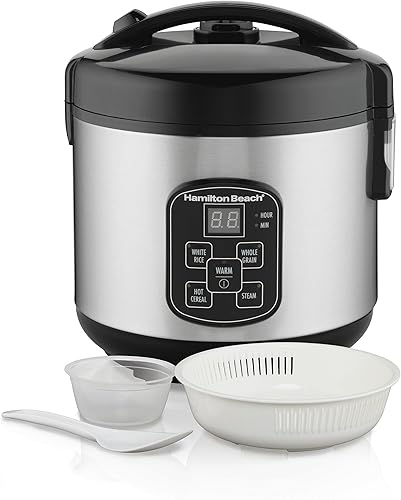
Stay at or below the marked fill lines inside the pot. If you regularly cook large batches, a larger-capacity model is the cleaner solution than pushing a small machine past its limit. For reference, the Hamilton Beach 37518MN has a 2 qt inner pot, while the Imusa GAU-00028 offers 2.5 qt, and the Hamilton Beach 37560R handles 15 qt for commercial or family-size needs.
Quick Fixes to Try Right Now
If your rice stuck today and you want a checklist, here it is. First, add a little more water next time, two tablespoons extra per cup of dry rice. Second, rinse the rice before cooking. Third, add a teaspoon of neutral oil such as vegetable or avocado oil to the water. Fourth, inspect the inner pot for scratches and replace it if the coating is damaged. Fifth, clean the heating plate at the base of the machine. Sixth, do not leave rice on keep-warm for more than an hour. Seventh, do not fill the pot past its maximum line.
Most people find that rinsing plus a small water increase fixes the problem within one or two cooks. If sticking persists after those changes, the inner pot coating is usually the culprit.
Frequently asked questions
Can I use cooking spray in my rice cooker to stop sticking?
You can, but a light coat of neutral oil (vegetable, avocado, or coconut) added directly to the cooking water works better and is easier to control. Cooking spray can leave a residue that builds up on the non-stick coating over time and may shorten its lifespan.
Is it safe to eat rice that stuck and browned on the bottom?
Lightly browned rice on the bottom of the pot is safe to eat. In some cuisines, this toasted layer is considered a treat. If the rice is black or smells burnt, discard that portion. Heavily burned residue also suggests the water ratio or coating needs attention.
My rice cooker is brand new and rice is still sticking. Why?
New pots can have a slight manufacturing residue. Wash the inner pot thoroughly before first use. Beyond that, the most likely culprits on a new machine are water ratio and skipping the rinse, not a coating problem. Give the water and rinse adjustments a few tries before assuming a defect.
Does the type of rice affect sticking?
Yes. Short-grain and glutinous rice varieties contain more starch and stick more than long-grain varieties like jasmine or basmati. If you cook these stickier varieties, rinsing and sometimes soaking before cooking makes a noticeable difference. Adjust the water ratio per the rice type, since short-grain often needs slightly less water than long-grain.
How do I get stuck rice off the inner pot without damaging it?
Fill the pot with warm water and let it soak for 15 to 20 minutes. The stuck rice will loosen on its own. Then clean with a soft cloth or non-abrasive sponge. Never use steel wool, metal scrubbers, or the abrasive side of a sponge on a non-stick surface, as that accelerates coating damage and makes future sticking worse.