Why Is My Homemade Ice Cream Icy?
Icy texture in homemade ice cream almost always traces back to large ice crystals forming during or after the churning process.
You followed a recipe, churned the mix, and scooped into the container, but the result came out grainy and icy instead of smooth. This is one of the most common complaints from home ice cream makers, and the good news is that most causes are easy to identify and fix. Understanding what creates a smooth texture, basically very small ice crystals distributed evenly through fat and sugar, helps you see where the process went wrong. A few adjustments to your recipe, your machine, or your freezing method will usually solve the problem.


The Core Problem: Ice Crystal Size
Ice cream texture is largely a matter of crystal size. Small, fine ice crystals feel smooth on the tongue, while large ones feel crunchy and icy. Crystals stay small when the mix freezes quickly and when the churning paddle keeps moving the mixture constantly as it freezes. Anything that slows the freeze or stops agitation early gives water molecules more time to bond together into bigger crystals. Once large crystals form, they do not break back down in the freezer, so the fix has to happen during churning, not after.
Your Bowl Was Not Cold Enough
Freezer-bowl machines, which make up most home models in the under-$100 range, depend on a pre-frozen canister to do all the chilling. The canister needs to be completely solid before you start, which typically means 24 hours in a freezer set to 0 degrees F or colder. If there is any liquid sloshing around inside when you shake it, the canister is not ready. A warm bowl cannot freeze the base fast enough, so the outer layer freezes slowly and produces large crystals while the center barely thickens. Always store the bowl in your freezer so it is ready when you want it, rather than pre-freezing it the morning of.
The Base Was Too Warm When You Added It
Pouring a warm or room-temperature base into a cold bowl raises the bowl's temperature and gives crystals more time to grow before the mix sets. Ice cream bases should be chilled in the refrigerator for at least 4 hours, and ideally overnight, before churning. Cold bases also churn faster, which means less time in the machine and less wear on a freezer-bowl canister. Some recipes call for making an ice bath to cool the base quickly before refrigerating it, which helps if you are short on time.
Not Enough Fat or Sugar in the Recipe
Fat and sugar both interfere with ice crystal formation. Fat coats the crystals and keeps them separated, while sugar lowers the freezing point of the mix so that more of it stays liquid even at freezer temperatures. Recipes that cut fat by using skim milk, or cut sugar to reduce sweetness, often end up icier as a result. If you are using a low-fat or low-sugar recipe and getting icy results, try adding 1 to 2 tablespoons of corn syrup or a small amount of cream cheese, both of which help block crystal growth without changing flavor much. Full-fat dairy is the easiest lever to pull.
Over-Churning or Under-Churning
Both extremes cause problems. Under-churning means the base has not been agitated enough for the crystals to stay small, leaving the mix too soft and wet before it goes into the freezer, where larger crystals then form. Over-churning can cause the fat to separate and butter to form, which also ruins texture. Most home machines produce a soft-serve consistency after 20 to 30 minutes, and that is the right stopping point. The final hardening happens in the freezer. Machines with self-contained compressors, like the Whynter ICM-200LS (4.5 stars across 4,558 reviews, 2.1 qt capacity, around $269.99) or the Cuisinart ICE-100 (4.6 stars across 2,944 reviews, 1.5 qt, around $379.95), can churn longer without the bowl warming up, which reduces the risk of under-churning.
Freezer Storage and Re-Freezing
Even well-churned ice cream can turn icy if it is stored incorrectly. Putting a warm or partially melted batch back in the freezer lets crystals regroup and grow. Press a sheet of plastic wrap directly against the surface of the ice cream before sealing the container, which limits the air contact that causes surface ice. Avoid storing ice cream near the freezer door, where temperature swings happen every time the door opens. Eat it within a week or two for best texture. If you let it soften on the counter and then re-freeze it, the icy texture is very hard to avoid.
When the Machine Itself Is the Issue
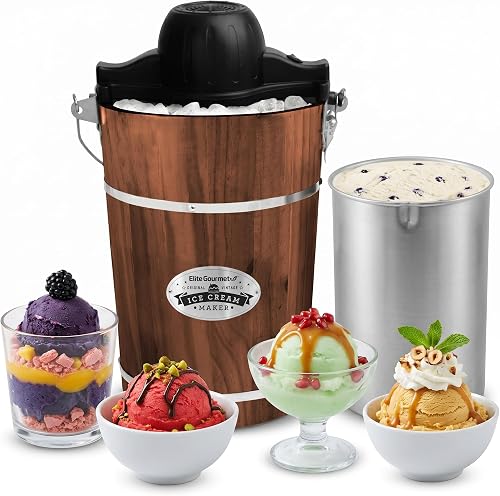
If you have ruled out recipe and process, the machine may be running too slow or losing cooling capacity. Freezer-bowl machines are especially sensitive because the bowl only has a fixed amount of cold to give. A 1-qt bowl churning a full 1-qt batch has less margin than a larger canister. The Elite Gourmet EIM949 (4.4 stars, 3,485 reviews, 6 qt capacity, around $89.99) is a good example of a larger canister model that gives you more room when you are making a big batch, though any canister machine still needs a fully frozen bowl. If your machine is older and the bowl no longer gets as cold as it used to, that may be the culprit.
Frequently asked questions
Why does my ice cream turn icy after one day in the freezer?
The most likely cause is large ice crystals forming during storage. This happens when air reaches the surface, when the freezer temperature fluctuates, or when the recipe does not have enough fat or sugar to block crystal growth. Pressing plastic wrap directly onto the surface of the ice cream before sealing the lid makes a noticeable difference, and keeping it near the back of the freezer rather than the door helps stabilize temperature.
Can I fix icy ice cream after it has already frozen?
Once large crystals have formed, you cannot break them back down by re-churning in most home machines, because the bowl will not be cold enough after the first use. The better approach is to let the batch soften slightly, scrape it into a food processor, blend it briefly until smooth, then repackage it and freeze again quickly. This is a workaround rather than a true fix, and the results depend on how icy the batch was to begin with.
Does adding alcohol help prevent icy ice cream?
A small amount of alcohol, usually 1 to 2 tablespoons of vodka or bourbon per quart, does lower the freezing point slightly and can improve scoopability and reduce iciness. Too much alcohol prevents the ice cream from setting at all, so use a light hand. This trick works best in recipes that already have adequate fat and sugar, since alcohol is not a substitute for the structural role those ingredients play.
Is a compressor ice cream maker better than a freezer-bowl model for avoiding icy texture?
Generally yes, because a compressor machine can chill continuously and maintain a consistently cold temperature throughout churning without depending on a pre-frozen bowl. This means you can churn a second batch right after the first, and the mix freezes more evenly from start to finish. Freezer-bowl machines work well when the bowl is properly frozen and the batch size matches the bowl capacity, but compressor models have more tolerance for variations in base temperature and batch size.
What is the ideal fat content for smooth homemade ice cream?
Most classic ice cream recipes use a mix of heavy cream and whole milk that lands around 10 to 16 percent butterfat. Heavy cream alone is 36 percent fat, and using it as most of the liquid produces a very rich, dense result that resists iciness well. Recipes that swap heavy cream for half-and-half or whole milk have lower fat content and are more prone to icy texture, especially after a day or two in storage. If iciness is a recurring problem, increasing the ratio of heavy cream to milk is one of the simplest adjustments.