How to Choose a Popcorn Popper
The two main choices are hot-air poppers and oil poppers. Hot-air models are cheaper to run, produce lighter popcorn, and are easy to clean, while oil poppers give a richer, more movie-theater flavor but require you to measure and add oil each time. Once you settle on that, narrow by capacity (how many quarts of finished popcorn you need per batch) and price.
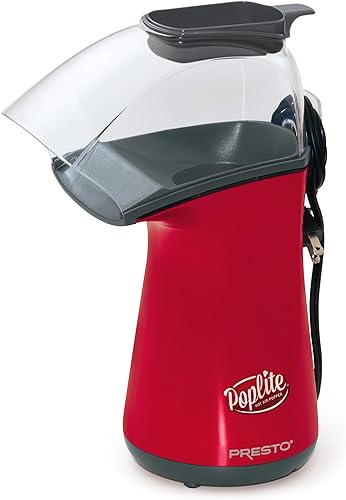


Hot-Air vs. Oil Popping: Pick Your Method First
Hot-air poppers blow heated air through the kernels using no oil at all, so the finished popcorn is lower in fat and the unit stays easy to wipe down. Oil poppers, sometimes called kettle-style machines, heat oil in a kettle or pot and stir the kernels as they pop, producing denser popcorn with a crunchier shell. For everyday snacking in a home kitchen, hot-air is usually the practical pick. If you want that county-fair or movie-lobby taste and do not mind the extra cleanup, an oil-based machine is worth considering. Microwave-bowl poppers that use your existing microwave also exist, and they occupy almost no counter space, though they give you less control over heat.
Capacity: How Much Popcorn Do You Need Per Batch?
Popcorn poppers are sold by the quart of finished popcorn they produce in one run. A 3 qt machine, like the Elite Gourmet EPM330M at $25.99 with over 7,200 buyer reviews and a 4.2-star rating, is plenty for one or two people. The Presto popper with a 4.5 qt bowl is a step up, carrying a 4.4-star rating across more than 54,000 reviews at around $31, making it one of the most validated options available for a mid-size household. For families or game-night groups, the Presto 5201 offers a 6 qt capacity at $68.91, rated 4.1 stars across 272 reviews, which gives you noticeably more popcorn per cycle without jumping to a commercial machine. As a rule, plan for roughly 1 to 1.5 quarts of finished popcorn per adult per sitting.
Price Ranges and What You Get
Under $30 gets you a basic hot-air or microwave-bowl popper that works fine for light use. The $30 to $75 range covers solid everyday machines with larger bowls and more durable components. Above $75 you mostly enter countertop kettle-style and commercial-grade territory, with metal construction, larger kettles measured in ounces of unpopped corn, and machines that can run for hours without overheating. Commercial carts from brands like Great Northern and Paragon start around $240 and go well past $500, built for high-volume settings. For a home buyer, there is rarely a reason to spend more than $75 unless you are equipping a home theater or small business.
Materials and Build Quality
Most consumer poppers use plastic bowls and housings, which keep weight and cost down. The Presto popper at 4.5 qt weighs just 2.1 lb, making it easy to store in a cabinet. The Elite Gourmet EPM330M combines plastic and stainless steel for a slightly sturdier feel at 1 lb total. If you want metal construction throughout, expect to pay significantly more, and those machines are usually designed for semi-commercial use. For home kitchens, BPA-free plastic is perfectly adequate and much easier to carry and store.
Counter Space and Storage
A compact hot-air popper with a 3 qt capacity typically has a small footprint and can tuck into a cabinet between uses. Larger 6 qt models are taller and wider. Commercial-style kettle machines on stands can weigh 40 to 70 lb and are meant to live in one spot permanently. Before buying, measure any shelf or cabinet opening you plan to use and check the product dimensions. A light machine you will actually pull out and use beats an impressive-looking model that stays in the closet.
Ratings and Review Volume as a Reliability Signal
When specs across popcorn poppers look similar, review count and star rating tell you a lot about real-world reliability. A 4.4-star product rated by more than 54,000 people is a very different level of confidence than a 4.4-star product with 17 reviews. Look for models rated by at least a few hundred buyers before trusting the average. The most reviewed poppers at Alluring Deals all cluster between 4.1 and 4.6 stars, and anything under 3.8 stars from a large review pool generally means recurring problems worth avoiding. For questions about specific comparisons, email us at hello@alluringdeals.com.
Common mistakes to avoid
- Buying more capacity than you need, then finding the machine too large to store conveniently.
- Choosing an oil popper without accounting for the extra cleanup time and the cost of oil over time.
- Trusting a high star rating from fewer than 50 reviews, which can easily be inflated by early buyers.
- Ignoring weight when buying a machine you plan to move in and out of a cabinet regularly.
- Buying a commercial-grade kettle machine for a home kitchen where it will sit idle most of the time.
- Overlooking whether the popping bowl or lid is dishwasher safe, which matters a lot for daily use.
Frequently asked questions
What is the difference between a hot-air popper and an oil popper?
A hot-air popper circulates hot air through the kernels using no oil, producing lighter popcorn that is easier to clean up after. An oil popper heats kernels in oil, which gives a richer, denser result similar to what you get at a movie theater. The right choice comes down to whether you prioritize convenience and lower fat content or prefer that traditional buttery flavor.
How many quarts of popcorn do I need per person?
A reasonable estimate is 1 to 1.5 quarts of finished popcorn per adult per sitting for a snack serving. A 3 qt popper is comfortable for one or two people, and a 4.5 to 6 qt model works well for families or small groups. If you regularly host movie nights with four or more people, a 6 qt machine saves you from running two batches.
Are plastic popcorn poppers safe to use?
Most consumer popcorn poppers use BPA-free plastics rated for food contact and the heat levels involved in popping. The key is to check that the specific product is labeled BPA-free and to avoid using any popper beyond its rated capacity, which can cause overheating. Plastic models from established brands with thousands of reviews have a strong track record of safe everyday use.
Can I use a popcorn popper to pop other grains?
Hot-air poppers designed for corn kernels do not reliably pop other grains like sorghum or amaranth because those require different temperatures and airflow. Some manufacturers explicitly limit their machines to popcorn kernels only. If you want to pop other grains, look for a stovetop method or a machine specifically designed for multi-grain popping.
How do I clean a popcorn popper?
Most plastic bowls and lids on consumer hot-air poppers are either dishwasher safe on the top rack or easy to wipe down with a damp cloth. The heating base should never be submerged in water. For oil poppers, let the kettle cool completely, drain any remaining oil, and wash the kettle with warm soapy water. Check your specific model's manual, since cleaning instructions vary and some coatings require hand washing only.