How to Choose a Rice Cooker That Actually Fits Your Kitchen
To choose a rice cooker, match the capacity to how many people you feed most nights, then check that the inner pot material suits your cleaning habits and the wattage is enough to finish a batch in under 30 minutes. Budget models under $40 cook plain white rice reliably, while mid-range cookers around $50 to $100 add stainless steel pots, faster heating, and keep-warm cycles that hold rice hot for hours without drying it out.

Capacity: the Number That Matters Most
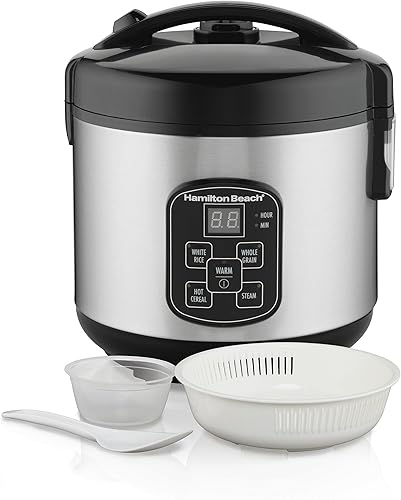
Rice cooker capacity is measured in quarts or cups of uncooked rice. A 1.5 qt cooker, like the Elite Gourmet ERC006SS at $29.99, suits one or two people and takes up very little counter space. A 2 qt model such as the Hamilton Beach 37518MN, rated 4.4 stars across 20,600 reviews and priced at $35.77, covers two to three servings comfortably. Step up to 2.5 qt for a family of four, and consider 5 qt or larger only if you cook for crowds regularly. Buying too large a cooker for your usual batch size leads to poor steam buildup and inconsistent texture, so err on the side of fitting rather than oversizing.
Wattage and Cooking Speed
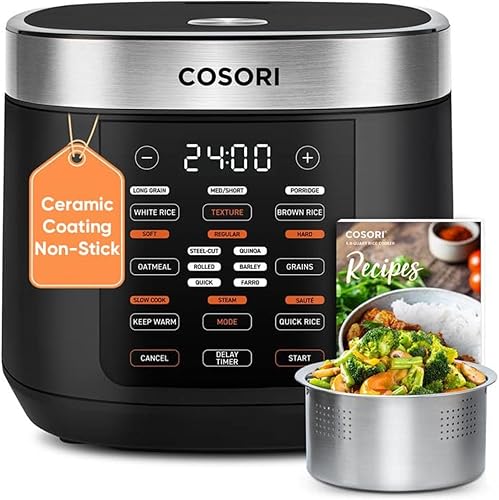
Wattage determines how fast the cooker reaches a full boil and how evenly it heats the pot. Budget models often run at 300 to 400 watts, which is enough for white rice but can take 35 to 45 minutes per batch. The Hamilton Beach 37518MN runs at 400 watts and handles a 2 qt load fine. Mid-range cookers pull 700 to 1000 watts, cutting cook time to roughly 20 to 25 minutes. The Cosori CRC-R501-KUS draws 1000 watts and earns a 4.8-star rating from 5,400 buyers at $99.99, which reflects how noticeably faster heating improves results on brown rice and mixed grains. If you cook specialty grains or oatmeal regularly, higher wattage pays for itself in time saved.
Inner Pot Material: Non-Stick, Ceramic, or Stainless Steel
The inner pot affects cleanup, durability, and whether you want to avoid certain coatings. Non-stick aluminum pots are the most common at budget prices and release rice cleanly, but the coating can scratch if you use metal utensils. Ceramic pots, found on models like the GreenLife CC008704-001 at $25.97, heat evenly and do not leach coatings, though they are heavier and can crack if dropped. Stainless steel pots are the most durable and dishwasher safe, but rice can stick without adequate water or an oil wipe. The Imusa GAU-00028, rated 4.6 stars from 8,800 reviews at $51.07, uses a stainless steel body and has proven reliable for everyday use. Match pot material to how carefully you treat your cookware.
Keep-Warm Function and Timer
A keep-warm function switches on automatically once rice finishes cooking and holds it at a safe eating temperature, usually 140 to 165 degrees Fahrenheit, without continuing to add steam. This is genuinely useful if meals happen at unpredictable times or you want rice ready when you walk in the door. Most cookers above $30 include this feature. A delay timer is rarer and adds meaningful convenience, letting you load dry rice and water in the morning so a hot batch is ready at dinner. If your schedule is irregular, prioritize models with both keep-warm and a delay timer over those with extra cooking modes you may never use.
Budget Ranges: Where the Value Lines Are
Under $35 you get reliable white-rice performance, basic keep-warm, and simple one-button controls. The Hamilton Beach 37518MN at $35.77 and the Elite Gourmet ERC003BX at $19.99 both clear 4.2 stars with thousands of reviews, making either a safe pick for light daily use. From $50 to $100 you gain better pot materials, faster wattage, and stainless exteriors that resist staining. The Imusa GAU-00028 at $51.07 and the Cosori CRC-R501-KUS at $99.99 represent opposite ends of this range, with the Cosori earning the highest rating in the category at 4.8 stars. Above $100, look for induction heating or pressure-style cooking cycles if you want Japanese-restaurant quality texture from short-grain rice, but for most households the mid-range is the sweet spot.
Size and Footprint on Your Counter
A compact 1.5 qt cooker typically fits within an 8 by 8 inch footprint and is easy to store in a cabinet. Larger 2.5 qt models like the Imusa GAU-00028 measure about 10.6 by 12.2 inches, which is manageable on most counters. Family-size cookers at 5 qt and above, such as the West Bend RCWB20CSS13 at 11.34 by 10.87 inches, take dedicated counter space. Weight matters too if you move the cooker between uses: the Bear DFB-B12W1-250725 at 3.1 lb and the Elite Gourmet ERC-003X at 2 lb are easy to lift and store. Measure your available shelf height before buying, since models with domed lids can be taller than the listed footprint suggests.
Common mistakes to avoid
- Buying a large-capacity cooker for a one or two-person household, which causes uneven cooking because the cooker needs a minimum volume of rice to build proper steam pressure.
- Ignoring wattage when choosing a model, then being surprised that brown rice or mixed grains take 50 minutes or more in a low-wattage budget cooker.
- Using metal utensils in a non-stick aluminum pot, which scratches the coating and shortens the life of the cooker within a few months.
- Adding the same water-to-rice ratio you use on a stovetop. Rice cookers typically need slightly less water, and the correct ratio is usually printed inside the lid or in the included measuring cup markings.
- Skipping the keep-warm comparison and buying a model without it, then discovering that rice left in the pot without keep-warm becomes cold and clumped within 15 minutes.
- Choosing a cooker based on the number of preset modes rather than build quality, since most households use only the white rice and keep-warm settings regardless of how many modes the marketing lists.
Frequently asked questions
What size rice cooker do I need for a family of four?
A 2.5 qt cooker is the standard recommendation for four people eating a normal side-dish portion of rice. That capacity produces roughly six to eight cooked cups per batch, which is enough for a full dinner without excess. If your family eats rice as a main dish or packs leftovers for lunch the next day, consider stepping up to a 5 qt model.
Does a more expensive rice cooker actually produce better rice?
For plain long-grain white rice the difference between a $20 model and a $100 model is small, and budget cookers like the Elite Gourmet ERC003BX have earned 4.2-star ratings from thousands of buyers doing exactly that. The gap widens with brown rice, short-grain Japanese rice, and multigrain blends, where higher wattage and better heat distribution in mid-range models produce noticeably more consistent results. For daily white rice, a reliable budget cooker is hard to beat on value.
Is stainless steel or non-stick better for a rice cooker pot?
Non-stick is easier to clean and releases rice without sticking when used correctly, but the coating degrades if scratched. Stainless steel lasts longer, survives dishwasher cycles, and contains no coatings to worry about, though rice may stick if you forget to rinse it first or skip a light oil wipe. Both materials produce equally good-tasting rice, so choose based on how you prefer to clean and how careful you are with utensils.
Can I cook things other than rice in a rice cooker?
Yes. Most rice cookers handle oatmeal, quinoa, lentils, steamed vegetables, and even simple soups or stews in the same pot. Models with a steam tray can cook vegetables or fish while rice cooks below, making them a practical single-appliance option for small kitchens. Avoid cooking anything that requires precise temperature control or extended browning, since a rice cooker cycles heat automatically and cannot maintain a low simmer the way a slow cooker does.
How do I know how much water to use in a rice cooker?
Most rice cookers come with a plastic measuring cup sized to the cooker's own scale, and inner pots usually have water-level lines marked for one, two, or three cups of rice. Use these markings rather than standard measuring cups from your kitchen, since the included cup is often smaller than a standard US cup. For white rice a 1 to 1 ratio by the included cup works in most models, while brown rice typically needs about 25 percent more water and a longer cook time.