Rice Cooker vs Pressure Cooker: Which One Belongs in Your Kitchen?
A rice cooker is the better choice when reliable, hands-off rice is your main goal and your budget is modest. A pressure cooker costs more and handles more tasks, including rice, but it requires you to manage pressure and steam release, which adds steps. Most cooks who make rice several times a week find a dedicated rice cooker simpler and plenty capable.

How Each Appliance Actually Works
A rice cooker traps steam in a sealed bowl, uses a heating element to bring the water to a boil, and then switches to a warm setting once a thermostat detects the temperature rise that signals the water has been absorbed. The whole process is automatic and requires no monitoring. A pressure cooker seals completely and raises internal pressure to about 15 psi, which pushes the boiling point of water above 212 degrees Fahrenheit and cuts cooking times sharply. That higher pressure speeds up rice, but it also means you must wait for the pot to pressurize before cooking starts and depressurize before opening, adding several minutes to the total time either way.
Rice Quality: Texture and Consistency
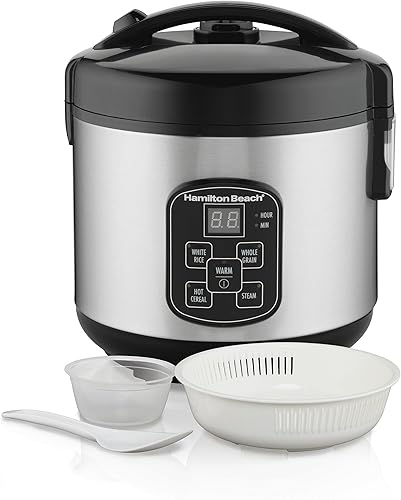
For everyday long-grain white rice, a basic rice cooker like the Hamilton Beach 37518MN, rated 4.4 stars across more than 20,600 reviews at $35.77 for a 2 qt model drawing 400W, produces fluffy, separate grains with no guesswork. The slow, steady steam cook gives starch granules time to absorb water evenly, which translates to consistent texture batch after batch. Pressure cookers cook rice faster but the aggressive heat can make grains slightly stickier or gummier if the water ratio is off by even a small amount. For sushi rice or short-grain varieties where stickiness is actually the goal, a pressure cooker can work well, but the margin for error is narrower.
Speed and Convenience in Daily Use
White rice in a standard rice cooker takes about 25 to 35 minutes with no active steps after you add water and press the button. A pressure cooker cooks the same rice in roughly 3 to 5 minutes at pressure, but you add 10 to 15 minutes for pressurizing and depressurizing, so the real-world difference is smaller than the cook-time numbers suggest. Where pressure cookers genuinely save meaningful time is on longer-cooking foods: dried beans that would take 90 minutes on the stove are done in 20 to 30 minutes, and tough cuts of meat become tender in under an hour. If your main use is rice and you are not cooking those slower items regularly, the speed advantage largely disappears.
Versatility Beyond Rice
Most rice cookers handle more than just white rice. Models like the Imusa GAU-00028, with 4.6 stars from over 8,800 reviewers at $51.07 for a 2.5 qt stainless steel unit drawing 700W, are routinely used for oatmeal, quinoa, and steaming vegetables with a basket. That covers a reasonable range of weekday cooking. A pressure cooker does all of that plus soups, chilis, pot roasts, and yogurt if the model includes that function. If you already own a slow cooker for braises and soups, the versatility gap between a rice cooker and a pressure cooker shrinks considerably.
Cost Comparison
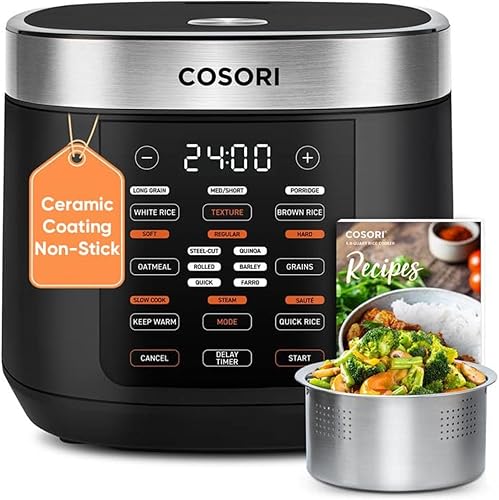
Entry-level rice cookers start below $25 and solid mid-range options sit between $35 and $60. The Cosori CRC-R501-KUS, rated 4.8 stars from over 5,400 reviewers at $99.99 for a 2.5 qt stainless steel unit drawing 1000W, is near the upper end of what most households need from a dedicated rice cooker. Decent electric pressure cookers typically start around $60 and go well above $150 for models with more presets or a larger pot. If budget is a real constraint and rice is your main need, a rice cooker is significantly cheaper to get started with.
Which One Should You Buy?
Buy a rice cooker if rice is a daily or near-daily staple, you want no-fuss results without managing pressure or steam, and you prefer keeping appliance costs low. Buy a pressure cooker if you want a single pot to handle rice alongside beans, soups, braised meats, and other long-cook dishes, and you do not mind a moderate learning curve on water ratios and release methods. A household that already has a slow cooker and just needs reliable rice will almost always be happier with a simple rice cooker than a pressure cooker.
Common mistakes to avoid
- Buying a pressure cooker expecting dramatically faster rice without accounting for pressurize and depressurize time, which erases most of the speed gain for a single pot of rice.
- Using too much water in a pressure cooker when cooking rice, which makes the grains mushy. The ratio is tighter than on the stovetop or in a rice cooker.
- Overlooking rice cooker capacity. A 1.5 qt cooker is right for one to two people, but a household of four or more will be better served by a 2.5 qt or larger model.
- Assuming a rice cooker only does white rice. Most handle brown rice, quinoa, and oatmeal, and many include a steam basket for vegetables.
- Lifting the lid on a rice cooker mid-cook to check progress. Every time you open it, steam escapes and the water ratio changes, which leads to undercooked or uneven rice.
- Buying the cheapest possible rice cooker without checking the inner pot material. Non-stick bowls scratch easily with metal utensils. Stainless steel bowls are more durable but require a small amount of oil to prevent sticking.
Frequently asked questions
Can a pressure cooker replace a rice cooker entirely?
It can cook rice, but it does not fully replace a rice cooker for households where rice is a daily staple. The added steps of pressurizing and depressurizing make it slower for small batches, and the margin for getting the water ratio right is smaller. A rice cooker is a lower-effort tool for that specific job.
Is brown rice better in a rice cooker or a pressure cooker?
Both work, but a rice cooker with a brown rice setting gives more consistent results for most people because it simply adjusts the cook time and steam cycle automatically. A pressure cooker can cook brown rice in 20 to 25 minutes at pressure, compared to 45 to 50 minutes in a rice cooker, so the time savings are more meaningful here than with white rice.
Do rice cookers use a lot of electricity?
No. Most household rice cookers draw between 300W and 860W and run for under 40 minutes per batch. That works out to a very small amount of energy per use, usually less than half a kilowatt-hour for a full pot. A pressure cooker runs at similar wattage but for a shorter active cook time, so the two are roughly comparable on energy use.
How do I know what size rice cooker to get?
A 1.5 qt cooker handles one to two servings and is a good fit for singles or couples. A 2 to 2.5 qt model covers two to four people comfortably, which is the most common household size. Larger families or anyone who cooks rice in bulk for meal prep should look at 5 qt or bigger models. When in doubt, size up rather than down, because rice cookers work fine at half capacity but cannot safely exceed their rated fill line.
Are rice cookers worth it if I can just use a pot on the stove?
For many people, yes. A stovetop pot costs nothing extra, but it requires you to watch the heat, adjust it as the water boils, and pull the pot at the right moment. A rice cooker handles all of that automatically and keeps rice warm without overcooking it. If you find yourself burning or undercooking rice on the stove even occasionally, the consistent results from a rice cooker are worth the modest price.