How to Choose a Slow Cooker
Choose a slow cooker based on how many people you feed regularly, what you plan to cook, and whether you need a programmable timer. Most households land on a 4 to 6 qt model with a stoneware or ceramic insert and at least a low, high, and warm setting. Budget around $30 to $70 for a reliable everyday cooker, though specialty materials and larger capacities push prices higher.

Capacity: Matching the Pot to Your Table
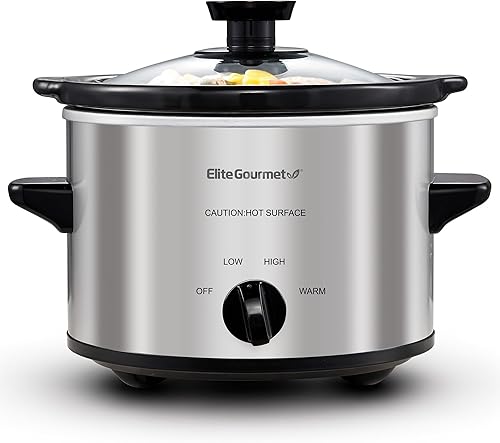
Slow cookers range from under 1 qt all the way to 8.5 qt. A 1.5 qt cooker like the Elite Gourmet MST-250XS (4.6 stars across more than 39,000 ratings) is practical for dips, oatmeal, or a single serving of soup, but it cannot handle a roast or a family-size batch of beans. For two to four people, a 4 qt cooker gives you enough room for most recipes without wasted space. Households of five or more, or anyone who likes to batch cook, should look at 6 qt or larger models. The Elite Gourmet MST-900D offers 8.5 qt of capacity at $57.99 and carries over 6,400 ratings at 4.4 stars, making it a cost-effective choice for big batches. Keep in mind that larger pots take up more counter and cabinet space, so measure before you buy.
Insert Material: Stoneware, Ceramic, and Stainless Steel
The cooking insert is where food spends six to ten hours, so material matters. Stoneware and ceramic inserts heat evenly and resist odor absorption, and most are dishwasher safe, which simplifies cleanup after a long cook. Stainless steel inserts are lighter and more durable against chips and cracks, though they can develop hot spots at the bottom if wattage is concentrated there. Glass lids on any insert let you check food progress without lifting the lid and losing heat. A few premium models use ceramic nonstick or porcelain coatings, which release food easily but require gentle handling to avoid scratching. Pick the material that fits how often you wash by hand versus by machine and how carefully you store your gear.
Wattage and Heat Settings
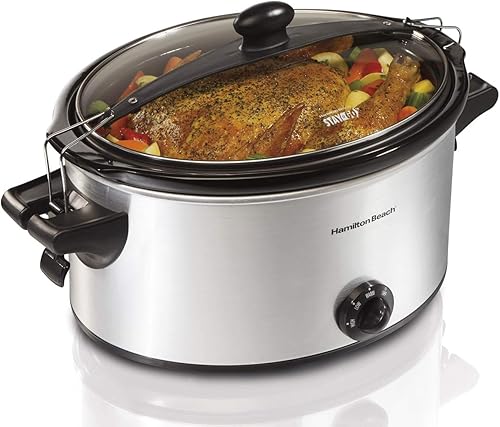
Slow cookers use far less power than a conventional oven, typically 100 to 400 W for most home models. The Hamilton Beach 33262, priced at $67.70 with 812 ratings at 4.6 stars, draws 150 W and holds 6 qt, which shows that wattage alone does not determine performance. What matters more is the spread between low and high settings and whether the cooker holds a stable temperature over many hours. At minimum, look for low, high, and warm settings. Warm is important because it lets food safely hold temperature after the cook cycle ends rather than sitting off and cooling into the food-safety danger zone. Some models offer a keep-warm-only setting that is separate from the main dial, which is useful for serving at the table.
Manual vs. Programmable Controls
Manual slow cookers have a simple dial or switch: low, high, warm. They are reliable, easy to clean, and typically less expensive. Programmable models add a digital timer so you can set the cooker to run for four hours on high and then drop to warm automatically. This is genuinely useful if you leave food cooking while you are away from home. Touch controls, which are common across most current models, respond to a light press and are easy to wipe clean. Push-button controls are found on a handful of higher-end units and tend to feel more tactile. Either works well; the choice is personal preference and whether you want a countdown timer.
Size, Weight, and Kitchen Fit
A large slow cooker can weigh 12 to 16 lb or more with the insert, so think about where you will store it and whether you can easily lift it out of a cabinet. The Hamilton Beach 33262 weighs 12.85 lb and measures 11.1 x 17.3 x 9.8 in, which is a useful reference for a 6 qt footprint. Oval inserts accommodate roasts and whole poultry better than round ones. Lid-lock clips are worth checking for if you plan to transport the slow cooker to potlucks or family gatherings, since they prevent spills in transit. Counter-height clearance matters too: measure the clearance under your cabinets before buying a tall model.
Budget and What You Get at Each Price Point
Under $25 buys a basic 1.5 to 2 qt manual cooker suitable for dips and small portions. The Elite Gourmet MST-250XS at $15.99 is a strong example with its 1.5 qt ceramic insert and 4.6-star rating. From $30 to $70 you get full-size 4 to 6 qt models with better insert materials and programmable timers. Above $100 you enter the territory of large-capacity cookers with heavier stoneware, higher wattage, and more durable builds. Specialty ceramic nonstick and premium materials push past $200. For most cooks, the $40 to $70 range offers the best balance of capacity, features, and durability.
Common mistakes to avoid
- Buying too small a cooker for everyday meals and then needing a second purchase within a year.
- Overfilling the insert past the two-thirds mark, which prevents proper heat circulation and can leave food undercooked.
- Lifting the lid repeatedly during cooking, which drops the internal temperature and adds 15 to 20 minutes to the cook time each time.
- Ignoring the warm setting and letting food sit off after cooking, which allows the temperature to fall into an unsafe range.
- Choosing a cooker with no programmable timer when the household schedule requires food to hold for variable lengths of time.
- Forgetting to check insert dimensions before buying a large oval roast or whole bird, only to find the cut does not fit.
Frequently asked questions
What size slow cooker do I need for a family of four?
A 4 to 6 qt slow cooker covers most family meals for four people comfortably. A 6 qt insert fits a whole chicken, a large pork shoulder, or a generous pot of soup without running short. If you batch cook or regularly have guests, leaning toward 6 qt gives you flexibility without the bulk of an 8 qt unit.
Is higher wattage better in a slow cooker?
Not necessarily. Slow cookers work best at a sustained low temperature over a long period, and many well-rated models operate at 150 to 380 W. Higher wattage can mean faster heat-up times and better recovery after lifting the lid, but it can also mean the low setting runs hotter than traditional recipes expect. Consistent temperature control across a long cook matters more than raw wattage.
Can I leave a slow cooker on when I am not home?
Yes, slow cookers are designed for unattended cooking. Use a model with a programmable timer so it switches to warm once the cook cycle ends, keeping food at a safe holding temperature until you return. Avoid overfilling the insert, make sure the lid seats properly, and keep the cooker away from cabinet overhangs that could trap heat.
What is the difference between a stoneware and a ceramic insert?
In practice, most manufacturers use the terms interchangeably for the fired clay material used in slow cooker inserts. Both heat evenly, resist odor absorption, and are generally dishwasher safe. The main variation is glaze quality and thickness, which affects how easily food releases and how durable the insert is against chips from bumps during handling.
Do I need a slow cooker if I already own an electric pressure cooker?
They do different jobs. A pressure cooker cuts cook time dramatically, while a slow cooker builds flavor over many hours at low heat, producing a different texture in braised meats and bean dishes. Many cooks own both because the low-and-slow method produces results that high-pressure cooking cannot replicate, and a slow cooker requires almost no attention during the cooking period.