Programmable vs Manual Slow Cooker: Which Type Should You Buy?
A manual slow cooker gives you a dial with low, high, and sometimes warm settings, and nothing more. A programmable model adds a digital timer and an auto-warm function that kicks in once the cook time runs out, so dinner does not overcook while you are away. For most households, the right choice comes down to your schedule, not the food you plan to cook.

What a Manual Slow Cooker Actually Does
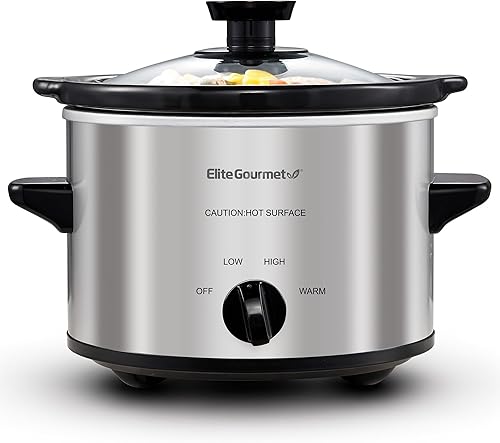
Manual slow cookers use a rotary dial or simple switch to select low or high heat. You turn it on, set your desired heat level, and walk away. There is no timer, so the pot keeps cooking at full heat until you physically turn it off or unplug it. That simplicity is a real advantage for cooks who are around the house, because there are no menus to navigate and nothing to program. The Elite Gourmet MST-250XS, a 1.5 qt model with 39,105 ratings and a 4.6 star average at $15.99, is a good example of a no-fuss manual cooker that appeals to solo cooks and small households. Manual units also tend to be less expensive and have fewer parts that can fail over time.
What a Programmable Slow Cooker Adds
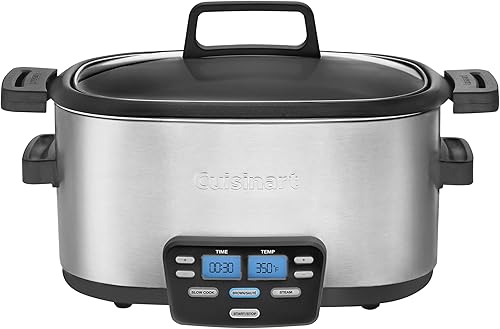
Programmable slow cookers include a digital control panel where you set an exact cook time, usually in 30-minute increments up to 12 or 24 hours depending on the model. Once the timer runs out, the unit drops to a warm setting automatically, typically around 140 to 145 degrees Fahrenheit, and holds there until you return. This is the feature that matters most for working households where nobody is home to check the pot. The Cuisinart MSC-600NAS, a 6 qt stainless steel model rated 4.4 stars across 6,600 reviews at $150.92, runs at 960 watts and pairs its programmable timer with a sear function that lets you brown meat directly in the insert before the slow cook begins. That kind of multi-step convenience is only practical on a programmable unit.
Heat Settings and Temperature Control
Both types reach similar low and high temperatures during cooking. Low on most slow cookers settles between 190 and 200 degrees Fahrenheit, while high runs 280 to 300 degrees Fahrenheit. The difference is not the heat ceiling but the control you have over time. Manual cookers cannot reduce heat automatically, so a recipe designed for 8 hours on low will overcook if you leave it for 10. Programmable cookers handle that gap by switching to warm before the food dries out or the edges start to scorch. For recipes with a tight finish window, like cheesecakes, custards, or fish, the auto-warm buffer on a programmable unit provides meaningful protection.
Price and What You Get for the Difference
Manual slow cookers typically run $15 to $50 depending on size and brand. The Brentwood SC-115W, a 1.5 qt plastic unit rated 4.6 stars across 682 reviews, costs $20.99 and represents the low end. Programmable models start around $40 for basic digital timers and climb past $150 for units that add browning, steaming, or multiple preset programs. The practical price gap between a manual and a basic programmable unit in the same size is usually $20 to $40, which is a fair trade if the auto-warm function saves even one batch of food from overcooking. If you cook exclusively on weekends when you are home, that premium buys you a feature you may never use.
Capacity Works the Same Either Way
Whether a slow cooker is manual or programmable does not affect how well it handles a given capacity. Large families or batch cookers often reach for 6 to 8.5 qt models regardless of control type. The Elite Gourmet MST-900D is an 8.5 qt stoneware model rated 4.4 stars across 6,400 reviews at $57.99, with 900 units bought last month, and it is a manual-style cooker that suits high-volume cooking without requiring any digital interface. Conversely, small programmable models exist in the 1.5 to 2 qt range for single servings. Size is a separate decision from control type, so settle on how much food you routinely cook before comparing programmable and manual options.
Which Type Fits Your Routine
Choose a manual slow cooker if you cook primarily on days you are home, want a lower purchase price, and prefer fewer buttons and settings to manage. Choose a programmable model if you start dinner in the morning before work, cook recipes that run close to the edge of safe holding time, or simply want the peace of mind that the cooker will shift to warm on its own. Programmable units are not smarter in terms of cooking results, but they are more forgiving of unpredictable schedules. Either type can produce the same braised short ribs or bean soup, assuming you manage the time correctly.
Common mistakes to avoid
- Buying a programmable cooker and never using the timer because the cook time is too hard to estimate, which means you paid extra for a feature sitting idle.
- Leaving a manual slow cooker on high for longer than the recipe specifies because there is no auto-warm safety net, which dries out meat and scorches edges.
- Assuming a higher wattage means faster or better cooking. Wattage in slow cookers affects how quickly the pot reaches temperature, not the final quality of low-and-slow dishes.
- Ignoring capacity when comparing models. A programmable 1.5 qt unit is not suitable for feeding four people, regardless of how many presets it offers.
- Choosing a programmable model for the preset cooking programs without checking whether those programs actually match your recipes. Many presets are just pre-set time and heat combinations you could dial in manually.
- Not accounting for the keep-warm temperature. Most units hold at 140 to 145 degrees Fahrenheit on warm, which is food-safe but will continue to tenderize (and eventually over-tenderize) proteins if left there for more than 2 to 4 hours.
Frequently asked questions
Does a programmable slow cooker cook food better than a manual one?
No, the food quality is determined by the recipe, the ingredients, and the cook time, not by whether the controls are digital or a dial. A programmable cooker gives you more precise time control and an auto-warm fallback, but it does not change how the heat actually works inside the pot. Both types can produce equally good results when timed correctly.
Can I leave a manual slow cooker on all day while I am at work?
You can, but it carries more risk than a programmable unit. A manual cooker holds its heat setting indefinitely, so an 8-hour recipe that runs 10 or 11 hours while you commute can overcook or dry out. If your schedule is unpredictable, a programmable model with auto-warm is a safer choice for all-day unattended cooking.
Is the auto-warm function safe for food?
Yes, provided the food reached a safe internal temperature during the cook phase first. The warm setting on most slow cookers holds food at approximately 140 to 145 degrees Fahrenheit, which is above the 140 degree Fahrenheit threshold the USDA recommends for holding cooked food safely. Extended warm times past 2 to 4 hours can affect texture, particularly with delicate proteins, but food safety is generally maintained.
Are programmable slow cookers harder to clean than manual ones?
The insert and lid are the same between most manual and programmable models, and both are typically dishwasher safe if they are made of stoneware or ceramic. The only additional cleaning concern with a programmable unit is the control panel area, which should be wiped down carefully to avoid moisture getting into the electronics. Neither type requires meaningfully more effort to clean than the other.
What size should I buy for a family of four?
A 6 qt slow cooker is the most common recommendation for four people and covers most standard recipes. If you regularly cook large roasts, stock, or batch meals for the week, a 7 to 8.5 qt model gives you more room. The control type, programmable or manual, does not affect which size you need.