Sous Vide vs Slow Cooker: Which One Is Right for You?
Sous vide machines hold water at an exact temperature (often within 0.1 degree), so your food can never overcook once it hits the target. Slow cookers run hotter and less precisely, which makes them great for braises, soups, and beans but risky for lean proteins. Most home cooks find real value in owning both, since they solve different problems.


How Each Method Actually Works
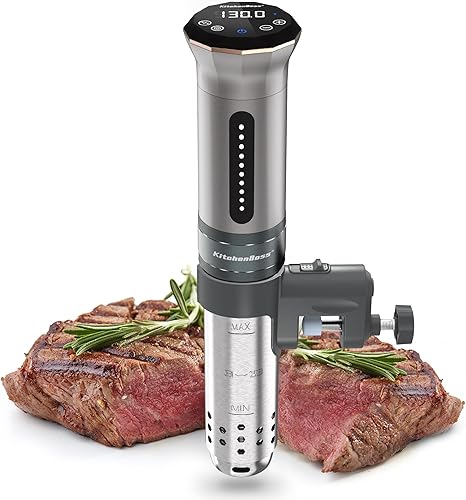
A sous vide machine (usually a stick-shaped immersion circulator) clamps onto any pot, heats the water to a precise target, and keeps it there for hours. Food goes into a sealed bag and cooks in that stable water bath, so the interior temperature can never exceed the water temperature. A slow cooker traps steam and liquid heat inside a ceramic or metal insert, cycling between a low setting (around 190 to 200 degrees F) and a high setting (around 280 to 300 degrees F). The heat comes from the sides and bottom, and the lid seals in moisture. The two methods look similar on the surface, both use low, extended heat, but the temperature control is in a completely different league.
Temperature Precision and Why It Matters
Precision is the defining difference between these two tools. A circulator like the KitchenBoss G300 (rated 4.5 stars across 2,255 reviews, priced around $106) runs at 1,100 W and holds water at whatever temperature you dial in, leaving no guesswork. The Yedi Houseware GV024 (4.6 stars, 1,350 reviews, about $89, 1,000 units bought last month) and the Monoprice 121594 (4.2 stars, 657 reviews, roughly $65, 800 bought last month at 800 W) are both popular budget options that offer the same fundamental precision. Slow cookers have no set-point thermometer. Their low and high labels describe a heating element mode, not a food-safe internal temperature, so results vary by brand, lid fit, and how full the pot is.
What Each Tool Cooks Best
Sous vide shines on proteins where doneness is everything: steak, chicken breast, pork tenderloin, salmon, and eggs. Because the water temperature caps what the food can reach, a 135 degree F bath produces medium steak every time, even if you leave it in an extra hour. Slow cookers are better at collagen-rich cuts that need hours of moist heat to break down, such as chuck roast, short ribs, pork shoulder, and whole chickens. They also handle beans, lentils, oatmeal, and soups without any supervision. Delicate fish or a lean chicken breast left in a slow cooker too long will turn rubbery, a problem sous vide largely avoids.
Hands-Off Time and Convenience
Slow cookers win on pure set-it-and-forget-it convenience. You add ingredients in the morning, set the dial, and come home to dinner. There is no water bath to fill, no bags to seal, and no sear step unless you want one. Sous vide requires a little more setup: fill a pot with water, attach the circulator, bag the food (a zip-lock with the water-displacement method works fine), set the time and temperature, then plan to sear the outside of proteins afterward for color and crust. The active work is still minimal, but the process has more steps. For weeknight dinners where simplicity is the goal, a slow cooker is usually the easier pick.
Cost and Counter Space
Budget immersion circulators like the Monoprice 121594 start under $70 and take up almost no storage space since they clip to any existing pot. Mid-range options like the Yedi GV024 or the KitchenBoss G300 run $89 to $106 and are still compact at roughly 3 lb. Slow cookers range from $30 for a basic 6 qt model to over $100 for programmable multi-cookers. A slow cooker does require dedicated counter or cabinet space for the insert and lid, while a sous vide stick fits in a drawer. If counter space is tight, the sous vide stick is the easier item to store.
Which One Should You Buy First?
If your main goal is hands-off family meals with tougher cuts, beans, or soups, start with a slow cooker. If you care most about perfectly cooked steak and chicken, or you already own a slow cooker and want the next level of control, a sous vide circulator is a logical next step. The two tools overlap very little in practice, so many cooks end up with both. A budget circulator at $65 to $90 is a low-risk way to try sous vide without a large commitment, and the learning curve is shorter than most people expect.
Common mistakes to avoid
- Assuming sous vide takes less time than slow cooking. Cook times are often similar or longer, though the result is more consistent.
- Using a slow cooker for lean chicken breast on high heat for the full day. The meat overcooks and turns dry well before dinner.
- Skipping the sear after sous vide. The water bath leaves the exterior pale and without crust, so a quick sear in a hot pan or with a torch is almost always needed.
- Overfilling a slow cooker with liquid. The lid seals in moisture, so most recipes need far less liquid than stovetop versions.
- Not removing air from the bag before sous vide cooking. Air pockets float the bag and leave parts of the food out of the water bath, causing uneven cooking.
- Setting a sous vide cook at too low a temperature for too short a time. Each protein has a minimum safe time-and-temperature combination that should not be skipped.
Frequently asked questions
Can a slow cooker replace a sous vide machine?
Not really. A slow cooker cannot hold water at a precise degree-level target, so it cannot replicate results like a 130 degree F medium-rare steak or a 145 degree F pasteurized chicken breast with a silky texture. Slow cookers are better at braised dishes and soups where exact internal temperature is less critical. The two appliances complement each other rather than substitute for each other.
Is sous vide safe without a vacuum sealer?
Yes. A standard zip-lock freezer bag works well for most home sous vide cooking. Use the water displacement method: lower the open bag slowly into the water bath, letting the water pressure push air out, then seal it just before the zipper hits the water. This removes enough air for reliable results. A dedicated vacuum sealer gives a tighter seal and is useful for longer cooks or freezer storage, but it is not required to get started.
How much does a decent sous vide machine cost?
Reliable immersion circulators start around $65, such as the Monoprice 121594, which draws 800 W and has earned over 650 reviews at a 4.2-star rating. Mid-range options like the KitchenBoss G300 ($106, 1,100 W, 4.5 stars, 2,255 reviews) add more wattage and a larger recommended container size. You generally do not need to spend more than $110 to get consistent, accurate results at home.
Which is better for meal prep, sous vide or a slow cooker?
Both work well for meal prep, but in different ways. Sous vide lets you cook proteins to exact doneness and then chill and refrigerate the sealed bags for up to a week, reheating in the same water bath without overcooking. Slow cookers excel at large-batch braises, soups, and grains that reheat easily on the stovetop or in a microwave. If you mostly prep proteins like chicken or steak, sous vide tends to produce more consistent results across a batch.
Do I need a special container for sous vide?
No special container is required. Most home cooks start with a large stockpot they already own, which works perfectly with a clip-on circulator. Dedicated polycarbonate sous vide containers with lids reduce evaporation during long cooks and make it easier to see the water level, but they are an optional upgrade rather than a necessity. For cooks starting out, a standard 8 to 12 qt stockpot is a practical first container.