What Can You Cook Sous Vide?
You can cook steak, chicken, pork, fish, eggs, vegetables, and even custards and cheesecakes sous vide. The method works for anything where hitting a specific internal temperature matters, and where a long, slow cook improves tenderness. Foods that need dry heat for texture, like bread crust or crispy skin, need a quick finish in a pan or oven after the water bath.


Beef and Pork: Where Sous Vide Really Shines
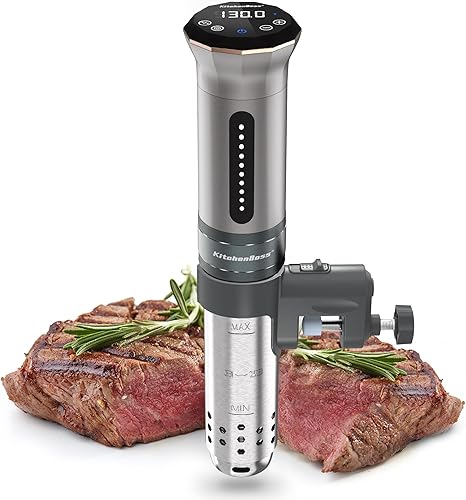
Steaks cooked sous vide reach edge-to-edge doneness at a single temperature, so you never get a gray ring of overcooked meat around a pink center. A 1-inch ribeye set at 130 degrees holds medium-rare from edge to edge, then gets a 60-second sear per side to build a crust. Pork tenderloin, chops, and shoulder all benefit the same way. Tough cuts like short ribs or pork shoulder go low and slow, often 24 to 48 hours at 155 to 165 degrees, and come out fork-tender without drying out. The KitchenBoss G300 (rated 4.5 stars across 2,255 reviews) handles larger vessel loads at 1,100 watts, which helps maintain a stable 16.9-quart water bath for bulky cuts like a whole pork shoulder.
Chicken and Poultry
Chicken breast cooked at 140 to 145 degrees for 1.5 to 4 hours stays juicy in a way that pan cooking rarely achieves, because you are pasteurizing rather than overcooking. Thighs can go slightly higher, around 150 to 165 degrees, for a more traditional texture. Duck breast benefits from a 130-degree bath followed by a skin-side-down sear to render the fat. Whole bone-in pieces work too, though you need to break them down to parts so each piece fits flat in the bag. A quick sear or a couple of minutes under the broiler after the bath firms up the skin.
Fish and Seafood
Fish is one of the trickiest proteins to cook conventionally because the window between underdone and dry is very narrow. Sous vide removes that problem. Salmon set at 122 to 130 degrees for 30 to 45 minutes comes out silky and translucent at the center, a texture that is nearly impossible to replicate on a stovetop. Halibut, cod, and sea bass work at similar temperatures. Shrimp cook fast, usually 15 to 30 minutes at 135 degrees, and the result is consistently snappy without rubberiness. The Yedi Houseware GV024, rated 4.6 stars by 1,350 buyers and weighing just 3.0 pounds, is easy to move around a smaller setup when you are working with delicate fish portions in a standard stockpot.
Eggs: The Classic Sous Vide Showcase
Eggs are the first thing many people try sous vide because the results are genuinely different from any other cooking method. A 63-degree egg, held for one hour, produces a white that is barely set and a yolk that is warm, thick, and custard-like. At 75 degrees for 13 to 15 minutes you get a hard-set white with a creamy, fully cooked yolk. Soft-boiled eggs hit around 167 degrees for 13 minutes. Because you are cooking dozens of eggs at the same temperature at once, this method is useful for brunch for a crowd. The Monoprice 121594 at $65.43 (800 units sold last month, 4.2 stars from 657 reviews) and its 800-watt motor is a capable entry-level circulator for egg-cooking batches in a small to medium pot.
Vegetables, Fruits, and Infusions
Vegetables cooked sous vide retain their color and nutrients because they never sit in boiling water. Carrots at 183 degrees for 1 hour come out tender but with a distinct bite. Beets at 185 degrees for 2 hours are earthy and concentrated, with none of the color bleed you get from boiling. Corn on the cob at 182 to 185 degrees for 30 minutes tastes sweeter than any other method. Garlic confit, compound butters, and infused oils are easy to make by vacuum-sealing aromatics with fat and holding at 140 to 190 degrees. Hard fruits like pears and apples soften beautifully at 180 to 185 degrees with added spices, making a quick dessert without any monitoring.
Desserts and Custards
Sous vide is excellent for custard-based desserts because the water bath holds the exact temperature needed to set eggs without scrambling them. Creme brulee cooked in sealed mason jars at 176 to 180 degrees for 1 hour comes out smooth with no oven-water-bath setup required. Cheesecake filling sealed in jars at the same temperature produces a dense, creamy texture. Dulce de leche made directly in a sealed can of sweetened condensed milk at 185 degrees for 12 to 14 hours is a popular low-effort use. Chocolate ganache and lemon curd are also reliable sous vide targets, since you can hold the temperature steady without any stirring or tempering.
Common mistakes to avoid
- Skipping the sear after the water bath, which leaves protein with a pale, soft exterior that most people find unappetizing.
- Setting the water temperature too high for fish because the safe-temperature habits from pan cooking carry over, when fish often needs only 122 to 130 degrees.
- Using a bag with too much air, which causes it to float and leaves part of the food above the waterline and unevenly cooked.
- Cooking low-acid vegetables like potatoes at temperatures below 183 degrees, where they can take much longer and still come out starchy in the center.
- Pulling meat straight from the bath and serving it without patting it dry first, which prevents a proper sear and produces steam instead of crust.
- Trying to cook foods that rely on dry heat for structure, like pastry dough or breaded items, which turn soggy in a sealed bag.
Frequently asked questions
Can you cook frozen meat sous vide without thawing it first?
Yes, you can drop a frozen bag directly into the water bath. Add roughly 50 percent to the cook time to account for the thaw phase, so a 1.5-hour fresh steak becomes about 2.5 hours from frozen. The results are almost identical to cooking from fresh, which makes it a convenient weeknight approach.
Is it safe to cook chicken below 165 degrees sous vide?
Poultry can be pasteurized at lower temperatures if held long enough. At 140 degrees, chicken breast reaches pasteurization after about 30 minutes of holding time at that temperature. The time-temperature combination is what matters for food safety, not just the peak temperature. If you are cooking for anyone with a compromised immune system, staying at or above 165 degrees is the more conservative choice.
What containers work best for a home sous vide setup?
A large stockpot works fine for most home use, especially for smaller circulators like the Monoprice 121594 at 800 watts. A dedicated plastic tub with a lid is quieter, holds heat better, and reduces evaporation during long 24-plus-hour cooks. For short cooks under two hours, the stockpot is usually all you need.
Do you need a vacuum sealer, or do zip bags work?
Zip-lock freezer bags work well for most home sous vide cooking. Use the water displacement method: seal the bag most of the way, then slowly lower it into the water until only the opening is above the surface, and the water pressure pushes most of the air out, then seal it completely. For oily marinades or very long cooks of 12-plus hours, a vacuum sealer gives a more reliable seal.
What foods should you avoid cooking sous vide?
Anything that needs dry heat for structure does not work well in a sealed bag. Breaded and fried foods, pastry, whole roasts that need a bark, and most grains are better suited to conventional methods. Delicate leafy greens also tend to turn mushy and discolored if held in a water bath for more than a few minutes. Stick to proteins, eggs, firm vegetables, and custard-style desserts for the best results.